I like to tease kormas. I’m not a fan – they’re too sweet for my liking, and seem a little bland to my palette. Consequently, I’d not had one for a long time.
I’ve recently been going hiking with my friends Romi and Katharine. We like to order a curry in the evenings, trying out restaurants and takeaways along the route. Romi is as much of a fan of spice as I am, so we’ll order the hottest dishes on the menu.
On our most recent trip, the local curry house didn’t have many vegetable options, and wouldn’t make a vegetable vindaloo specially. So we asked for a vegetable madras, spiced up to vindaloo strength. They managed this and did a pretty good job. It had the fire of a vindaloo, but the taste of a madras.
The next night, we decided to order curry again. This time, we decided to ask for something foolish. Could we have a vindaloo-strength Jalfrezi? Yes we could. Could we have a vindaloo-strength korma? Yes we could.
The korma vindaloo tasted as ridiculous as you might expect. The creaminess was in conflict with the spice – but for a korma it was pretty good. Although I’m not sure the curry house should really have indulged our experiment.
We’ve recently had some Israeli visitors at work. This has led to some discussions of kosher food and where to find it in Brighton. It turns out that this town has no kosher restaurants. Yesterday this led to a rambling conversations that ended up somewhere surprising.
One of our guests said that Hove was, at least, better than India for kosher food. We ended up talking about Jewish communities there. It turns out that most of the Jewish population of Cochin moved to Israel in the 1960s, and they have their own cuisine that fuses Indian and Jewish food. It’s quite an obscure type of cookery – the community is about 7000 strong, and there are no restaurants, apart from a private dining option – and only a couple of cookbooks.
Jewish people are said to have emigrated to India as early as early as the time of King Solomon, around 587 BCE; the earliest records date back to 70CE and synagogues are known to have been built in the 12th and 13th centuries. Other Jewish groups moved there in the fifteenth century in response to persecution in Europe. The community in Cochin avoided the horrors of the Goan inquisition, with Cochin being under Dutch control rather than Portuguese. Following Indian independence and the founding of Israel, most Jewish people left, although the synagogue in Cochin has a small but declining congregation.
I’ve never been rained on as hard as we were in Cochin
One group that moved to Israel settled in the area of Mesilat Zion, near to where one of my colleagues lives. A short distance from Tel Aviv, the moshav (co-operative agricultural community) was founded in 1950 and later taken over by a community from Cochin. The current population here is about 1200 people.
“Our food isn’t like the Indian food you know,” explained Miriam Elias… “We use different spices. We stick to a few basic ones and don’t mix them up like the Indians do.” Not only does their cuisine differ from Indian food from other areas, it differs from Hindu cooking in Cochin, too. First of all, it is kosher and devoid of dairy products (the closest you get is coconut milk), and some dishes are strictly Jewish and don’t exist in the local Hindu menu at all. Many of the dishes serve a certain purpose and are aligned with holidays and specific dates. For instance, the Cochin papadam (which differs from the kind of papadum you get in Indian restaurants) is eaten before the Tisha B’Av fast and is served with various kinds of curry. “When we say ‘curry’ we mean something completely different than what you know as curry,” clarified Bat Zion Elias. “Curry for us isn’t a spice mixture or a hot dish. Our curries are a variety of cold salads made out of cooked vegetables, like tomatoes, onions, or eggplants, sort of like matbucha…”
The Cochini food includes a lot of coconut dishes, which is useful because this can substitue for milk in kosher dishes. There is also an interesting approach to cooking onions:
“…We brown large quantities of onions, and then cook vegetables or whatever it is we are cooking in the onion juice, instead of cooking in water. A lot of our dishes are cooked this way, and it gives them a very distinct and special flavor.”
There are only two books devoted to this type of cooking, along with recipes in a few other books. I’ve ordered a book called Spice and Kosher, a book on the cuisine of Cochin Jews. I’m looking forward to experimenting with this. Eti Gilad’s The Cochini Cuisine looks to have been privately printed and doesn’t turn up on Amazon. My copy of Spice and Kosher arrives tomorrow. I can’t wait to explore something of this new cuisine.
Cochin’s fishing nets are one of its famous sights
I’d been meaning to grow chillis from seed, but never got around to it. In the past I’ve been terrible at keeping plants and they always died. Some people have green fingers, I have black fingers. When my friend Rosanna offered seeds from her successful homegrown chilli plants, I had no excuses and said I’d take some.
The tiny seeds (so crunchy) arrived wrapped in clingfilm. Looking at them it seemed amazing that anything would every grow from them.
Rosanna sent me instructions via Facebook. The first few stages seemed simple enough:
Take a chilli seed, plant it in shallow compost (about one to two inches deep – a takeaway container, an old margarine tub or yoghurt pot is ideal), at a depth of about a quarter of an inch.
You don’t need any special sort of compost – anything will do.
Plant one per yogurt pot or 2-3 per takeaway container. Plant twice as many as you think you’ll need: not all seeds will germinate.
Water well so the soil is damp but not sopping wet. Cover the container with clingfilm and leave somewhere warm in semi-shade (i.e. out of direct sunlight) for a week or two until they sprout. Depending on the time of year this will take between one and four weeks.
I went out to buy compost and plant-pots. It turns out, you can get a lot of cheap gardening things from the pound shop, whose range is endorsed by gardening celebrity Charlie Dimmock. I put twenty seeds out, which is apparently a lot, then waited to see what would happen.
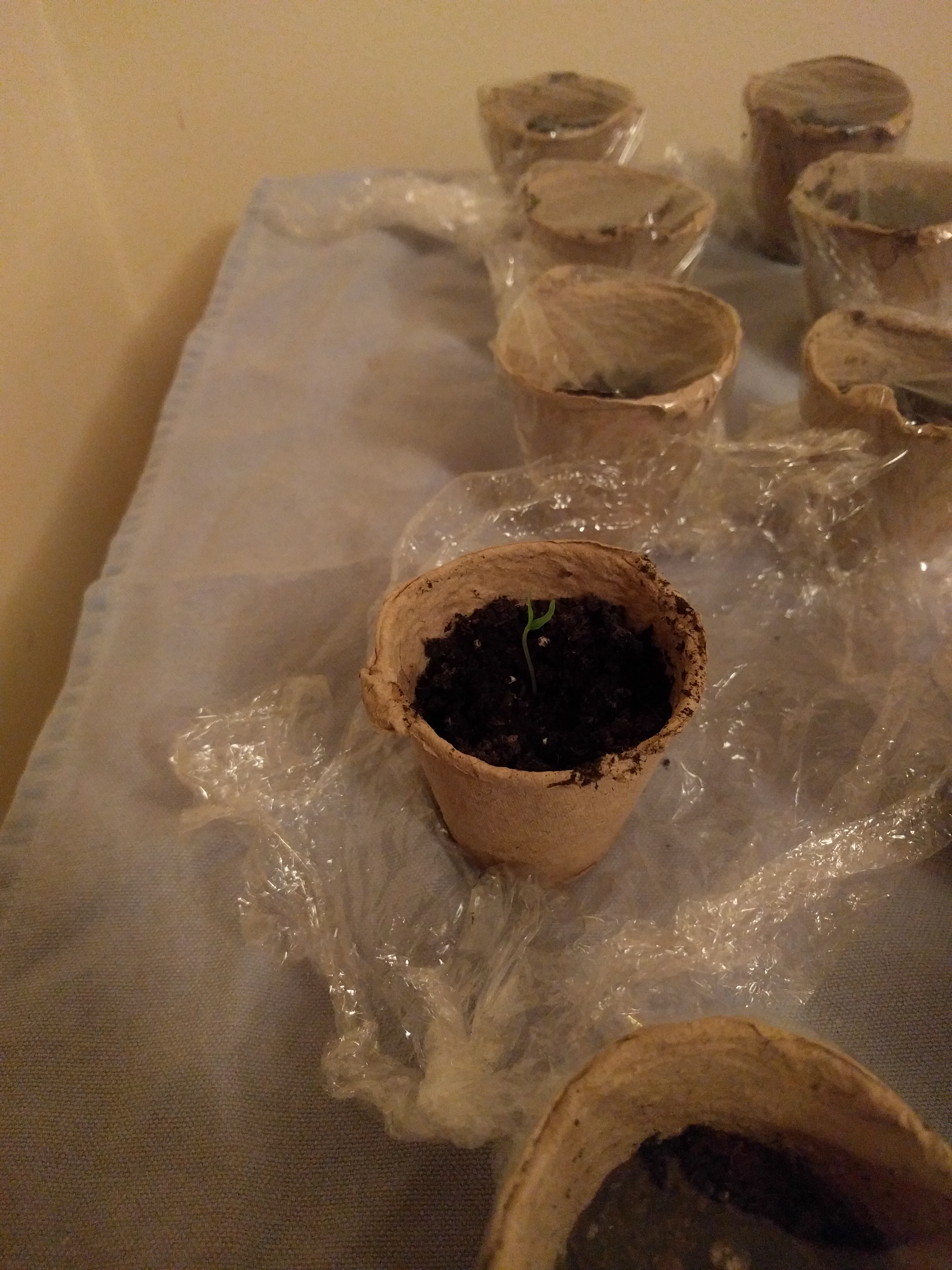
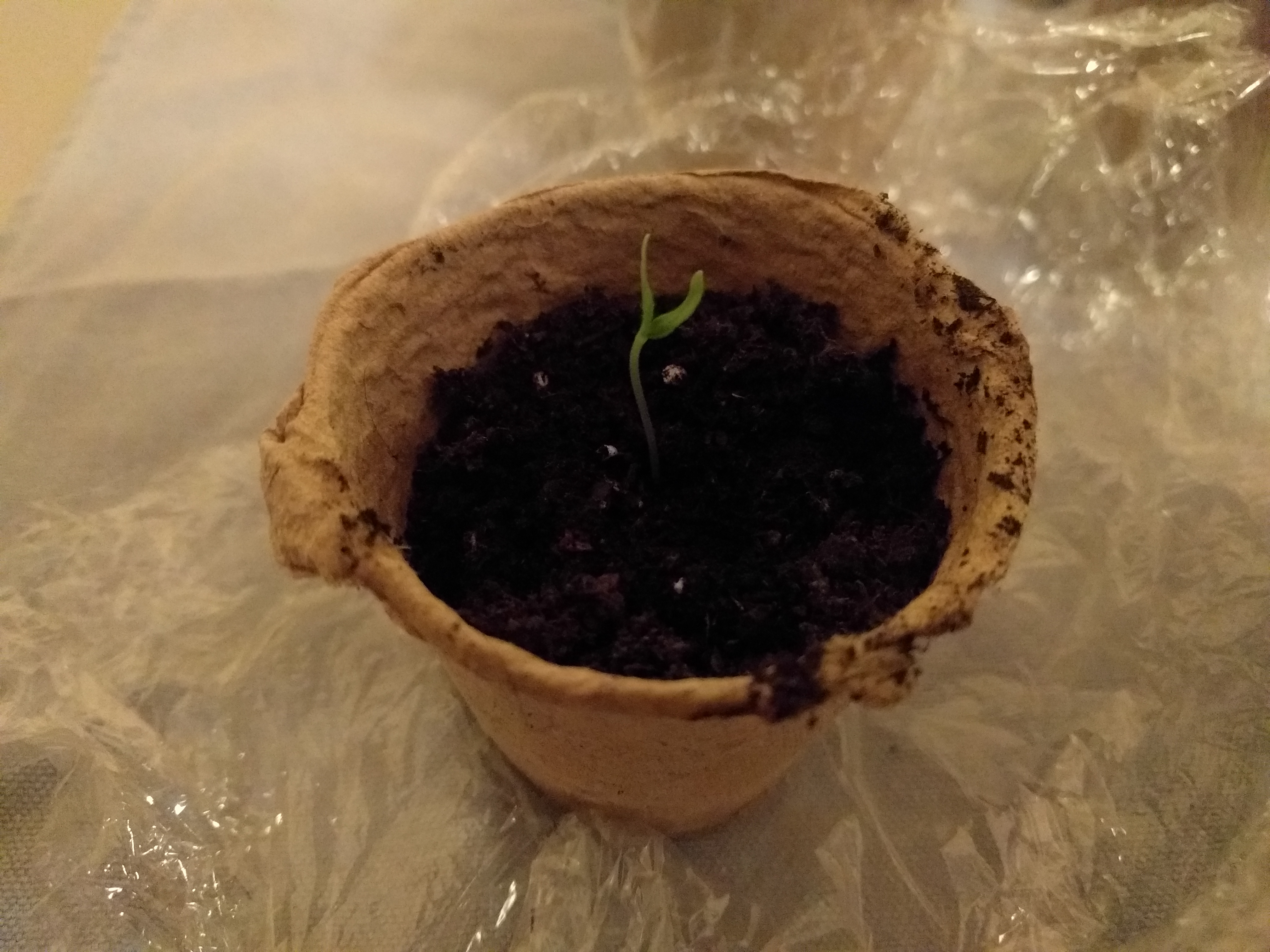
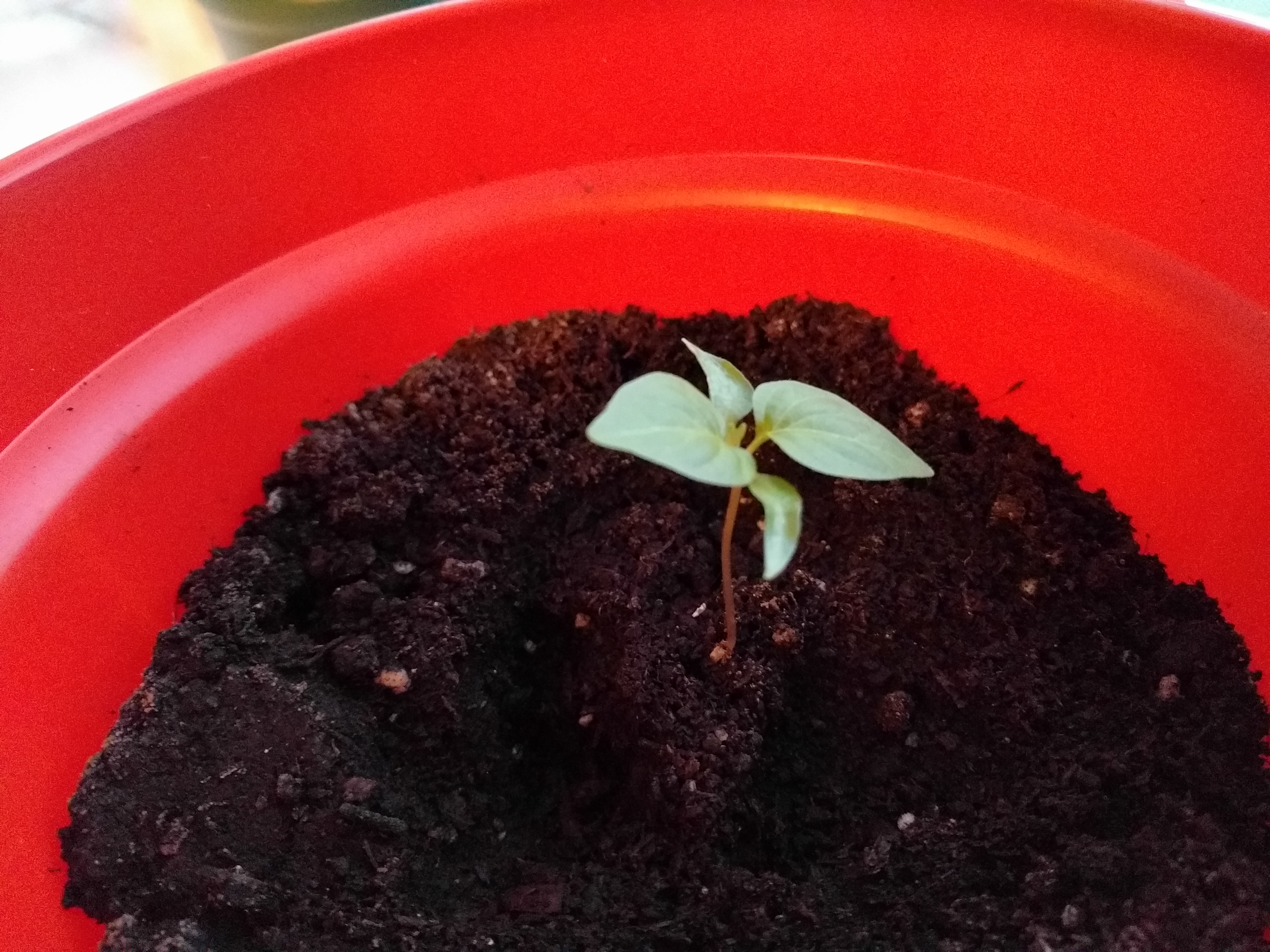
Only one chilli plant has actually emerged from the soil since I planted them three weeks ago. The others have been sent to the airing cupboard to see if that encourages them to start sprouting. Even though my success rate so far is a mere 5%, that first plant feels like a victory.
In May 2010 I wrote a post about the Lost Bookshops of Brighton. Visiting Brighton’s bookshops in the 1990s was one of the things that made me fall in love with this town. Over the last 20 years, most of the country’s second hand bookshops have closed, caught between Amazon and a surge in charity shops (who avoid many of the overheads of second-hand bookshops). I miss hunting for second hand books, something I used to spend whole afternoons doing.
Another Brighton bookshop is about to be lost. PS Brighton is covered in 50% discount posters, a ‘To Let’ sign hanging above it. This was an excellent source for cult novels, rock biographies and art books. It’s going to be replaced by another coffee shop.
The day after taking the photograph above, I walked down Trafalgar Street. The shop at the corner of Over Street, most recently a bike shop is being refitted. A ghost-sign has emerged from one of the shop’s former incarnations as the Trafalgar Bookshop. I can no longer remember the specific layout of this place, only that it was one of the places I enjoyed hunting.
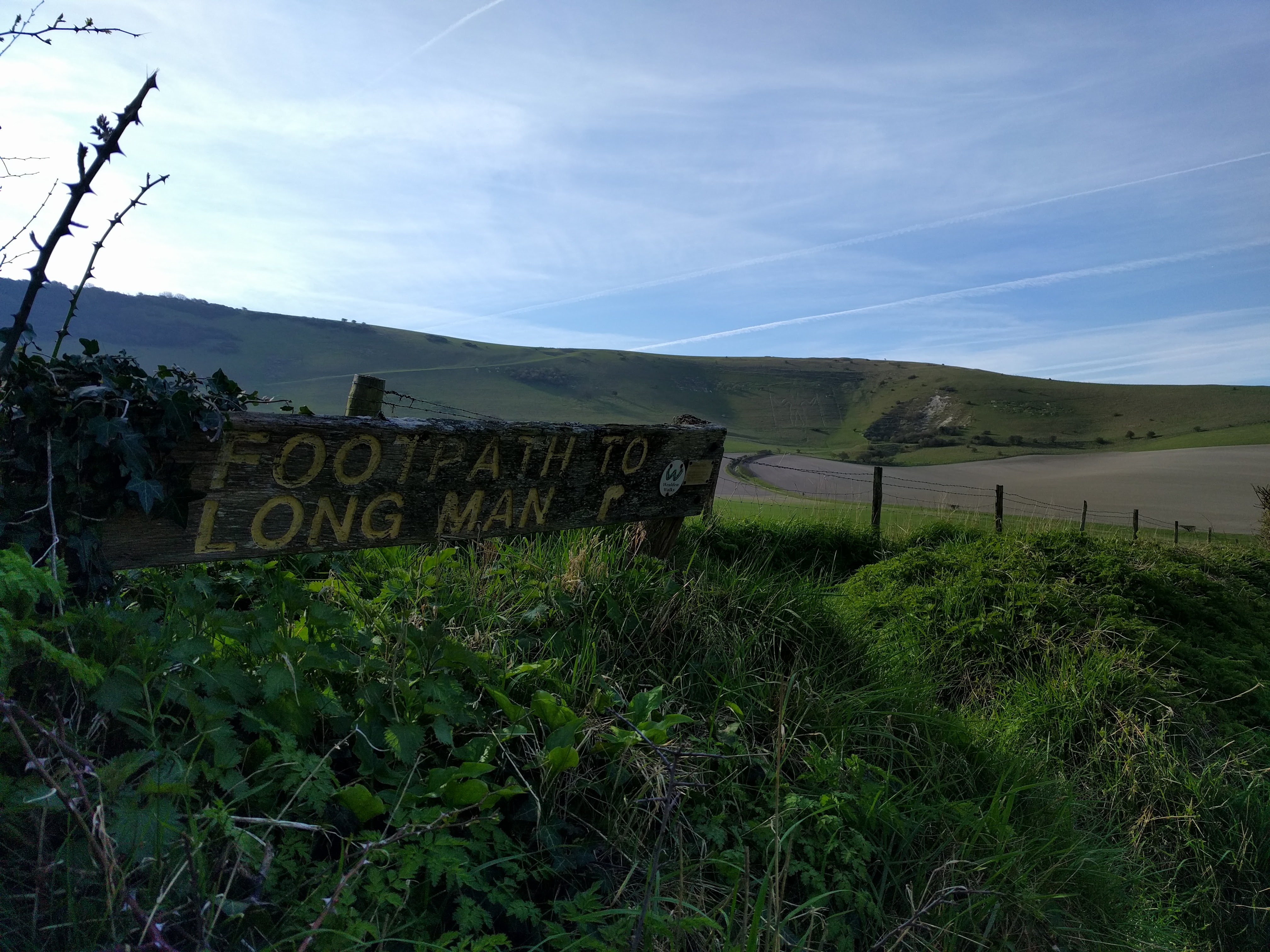
Back in December I walked the Downs Link with Kaylee. That route was a little dull – being an old railway line, it was flat, straight and screened by trees on both sides. The most exciting part was the start, St. Martha’s church near Guildford. After seeing that stunning landscape, which was part of the North Downs Way, I knew I had to do that trail.
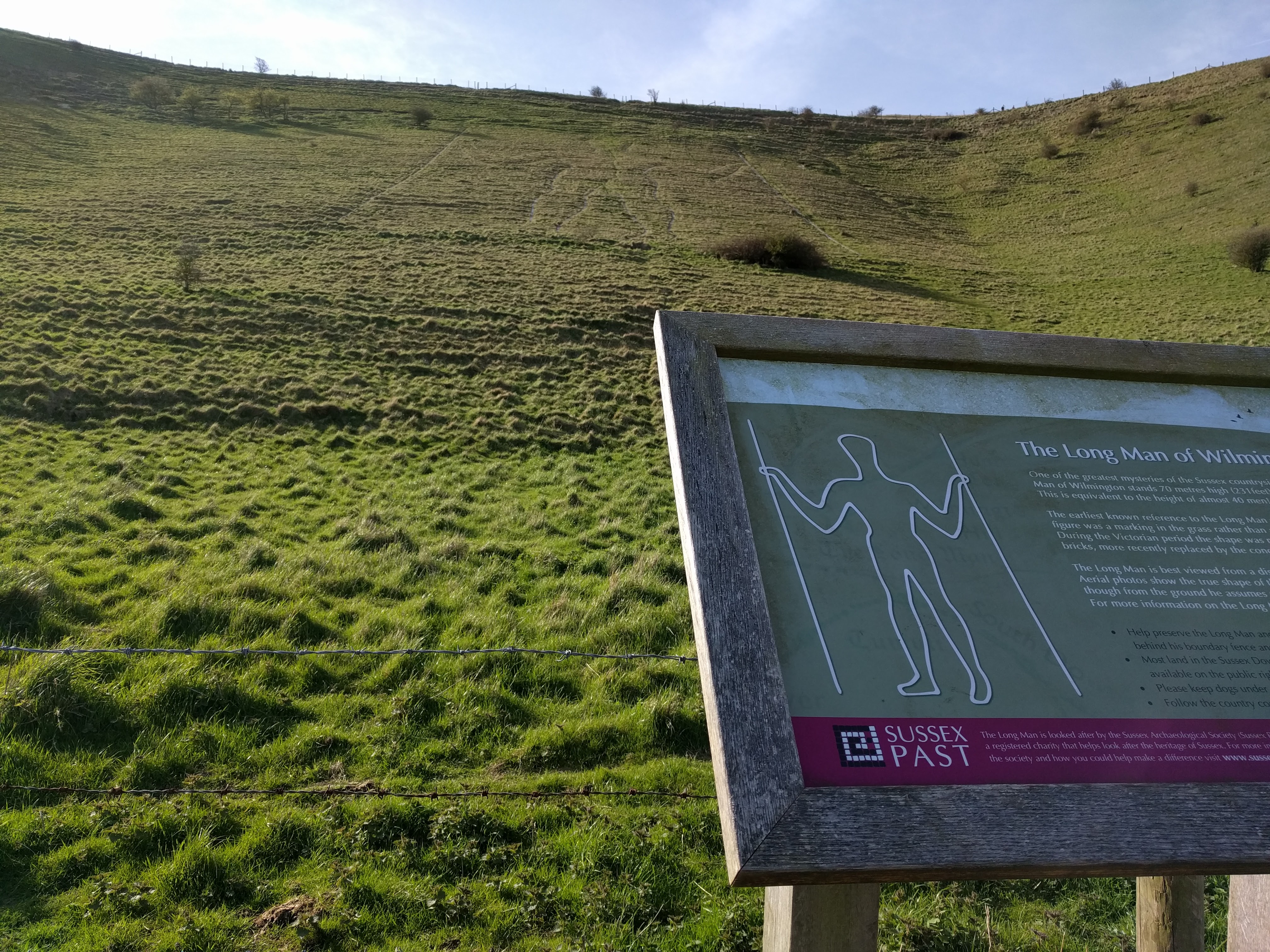
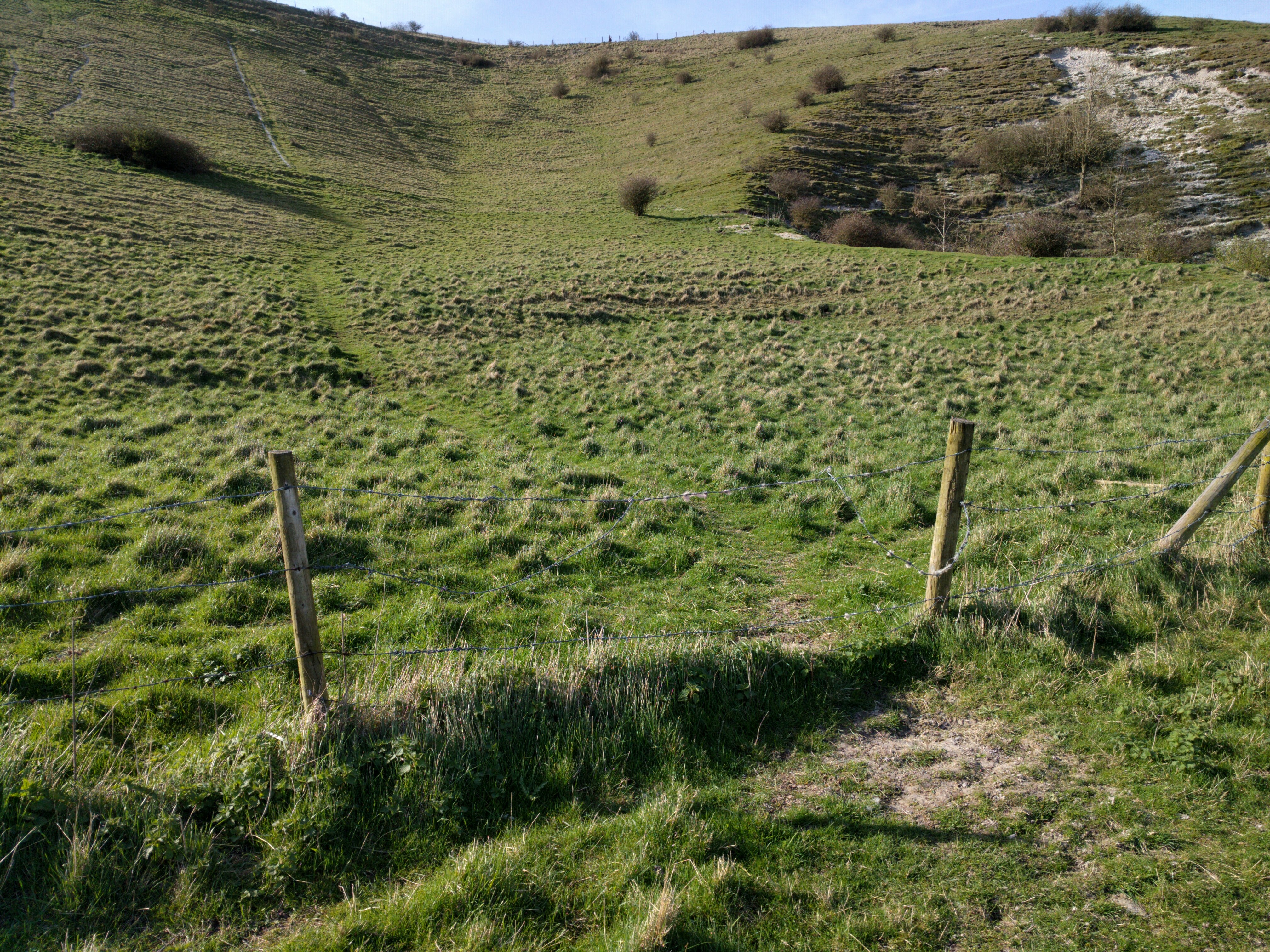
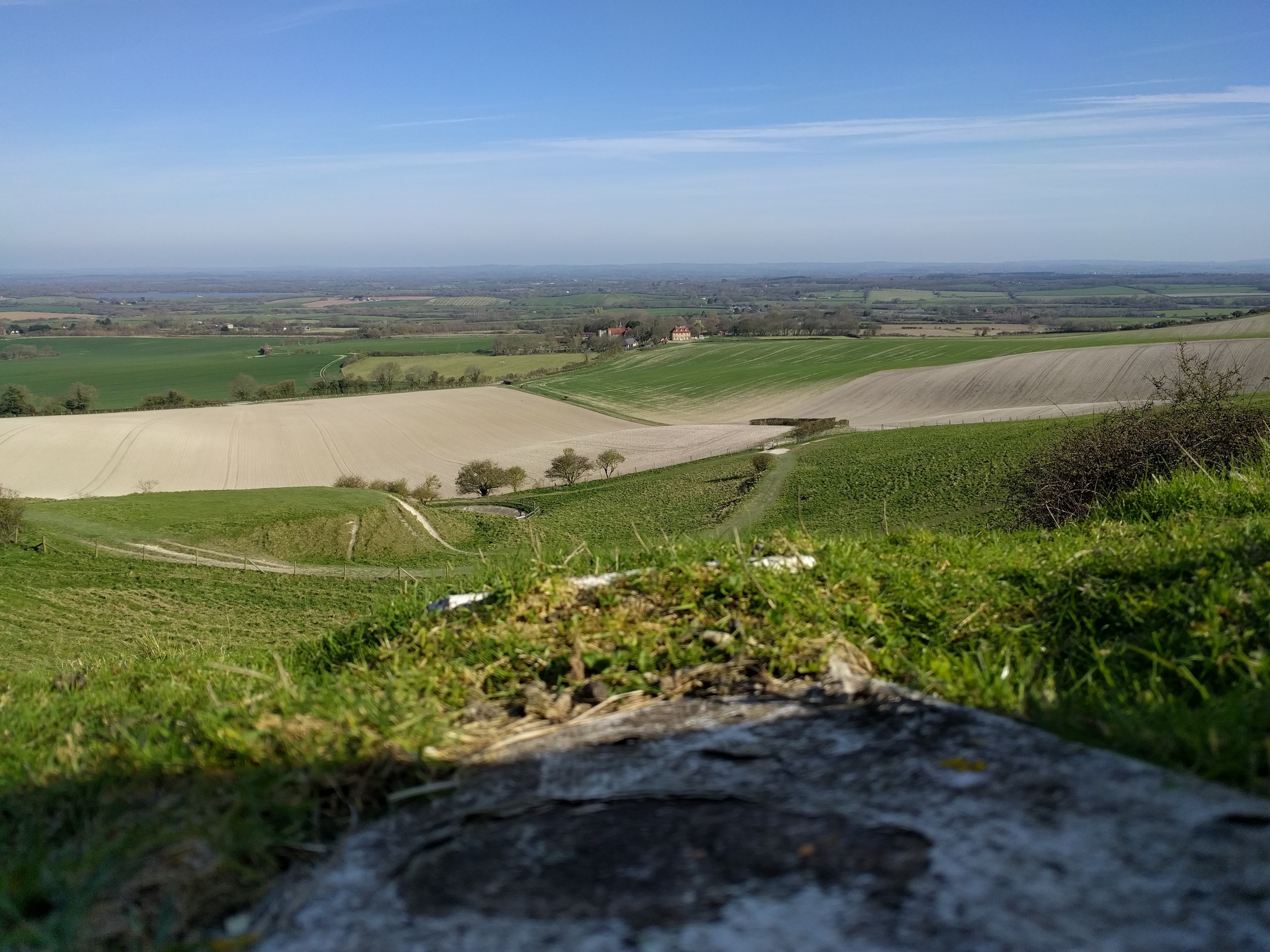
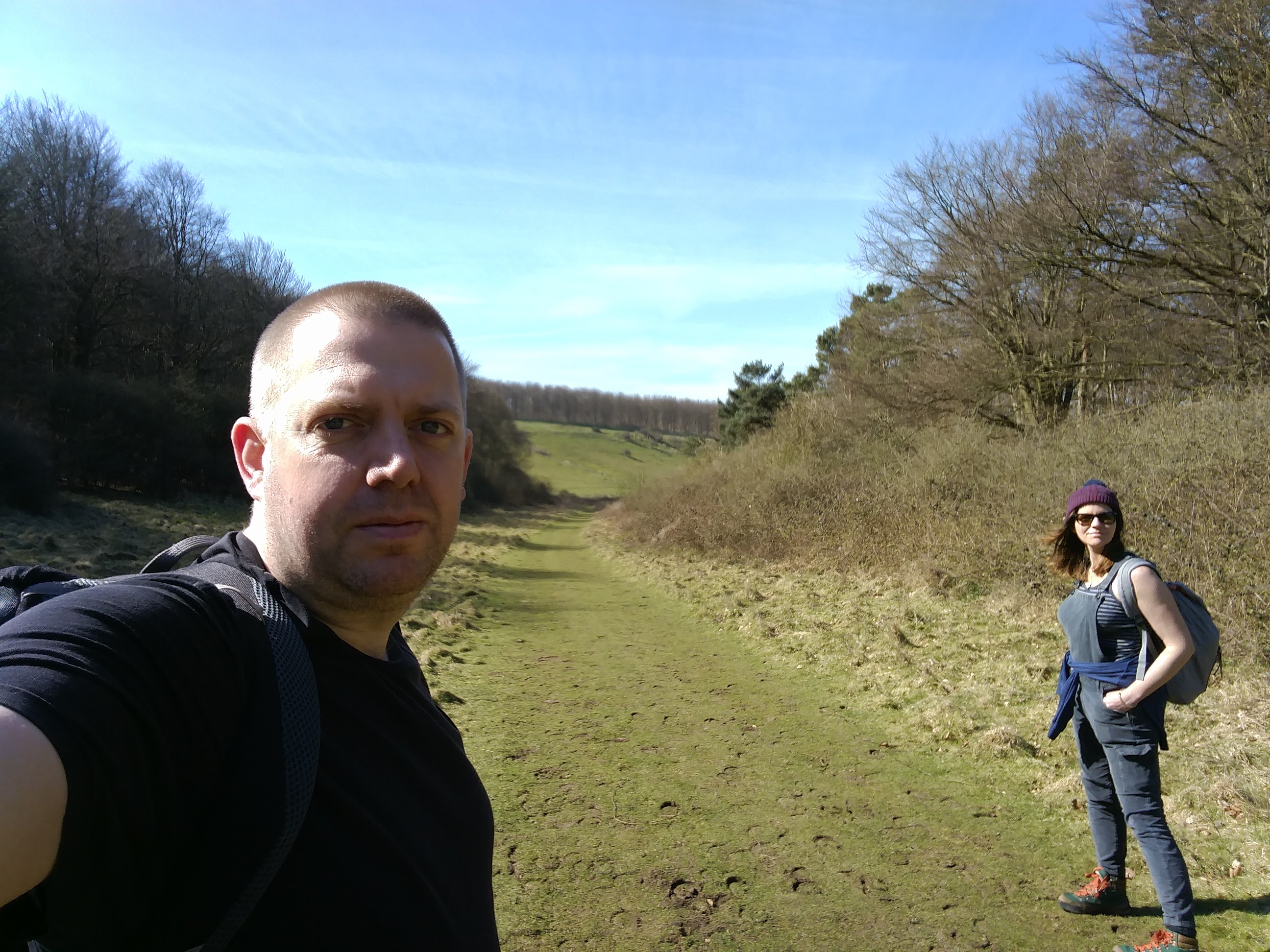
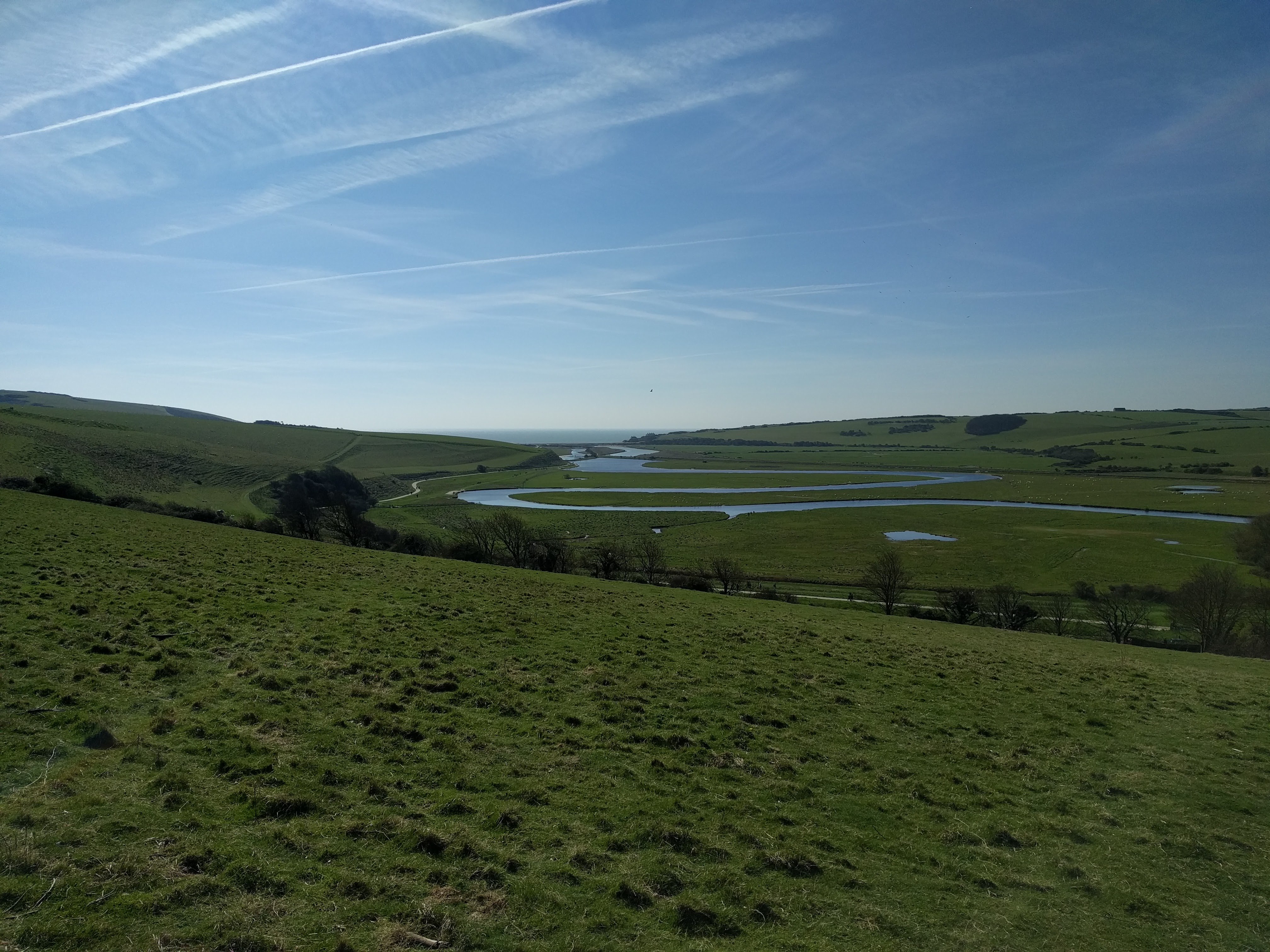
I finally began in January, setting out with Katharine and Romi. It was frosty but not too cold, and the winter light was incredible. Our pace was fairly slow as we kept stopping to take photographs – although none of us snapped the woman we met carrying a scythe. She was actually charming, despite being armed.
Towards the end of the second day we had one of the best moments I’ve ever had on a walk. We emerged from a wooded trail onto a hillside common which was full of families with dogs, taking advantage of the good weather. Everyone seemed in a great mood. What a lovely way to spend a winter’s day!
I’m currently halfway through Bee Wilson’s excellent book, First Bite, which is about how we learn to eat, mixing historical research with personal stories. I was delighted when the Guardian published her article Who Killed the Great British Curry House.
The piece covers some of the same issues raised in the Vindaloo Stories show about the decline in curry house customers and skilled staff. These problems are now so severe that two or three curry houses are closing each week. Wilson quotes the Bangladeshi Caterers’ Association warning that “as many as a third of Britain’s curry houses – around 4,000 in total – will close over the next couple of years.”
Staffing has been a problem for some time, with restaurant owner’s children leaving the business and immigration restrictions preventing trained chefs from overseas working in the UK. Initiatives such as the curry colleges have failed to have any impact. These ongoing problems have been made worse by the post-referendum economy, which is causing both rents and prices to rise. Wilson describes one owner who is making a loss on many meals, but nervous of putting the price up. For many people, curry is a cheap evening out. One chef, Kobir Ahmed, explains how “there were Cambridge curry houses that had not put up their prices in 20 years because they were scared of losing customers”.
Maybe the curry house is just not needed in the today’s Britain in the same way as it used to be. As Wilson points out, there are far more options for eating out than there were. I also think the curry house is suffering from a change in British socialising. More liberal licensing laws mean that pubs are open later, so there is less drive to the post-pub curry. More pubs are now offering decent food too – indeed, Wetherspoon’s, with its Thursday Curry Club, is the country’s biggest curry chain.
For me, one of the great things about Indian restaurants in Britain is that you can find them everywhere. I’ve been hiking around the country with friends recently and, wherever we go, we can find a curry restaurant. Some have been dire (Stanford-Le-hope, I’m looking at you) others have been amazing. I love the little ways each one stands out from the British curry-house template.
One of my favourite moments in the article was when Wilson described “the soul food of the UK, the bowl of warmth that people turn to when sniffy, sloshed or merely peckish” Curry is a vital part of modern British food, and it’s sad to see it in decline.
Last week, on Wednesday 11th, I did the first performance of a show based on Vindaloo Stories. It was lots of fun to put on with a large audience turning out.
Promoting an event in January was hard work, but it was fun. I was interviewed by Melita at Radio Reverb the night before, and Wednesday started early so that I could appear on Radio Sussex’s breakfast show.
This was the first time I’ve done a show or event by myself, so I was delighted that it came out so well. Lots of people helped with it – Emily taught me about press releases; David Bramwell, Rosy Carrick and Rachel Blackman gave great feedback; Kaylee did a great job on the tech; and Robin was there on the night for reassurance. Ema at the Marlborough was also a great help throughout.
There should be recordings coming from the radio interviews. In the meantime there was a review posted by the Latest magazine. I also did an interview with Viva Brighton for this show and an upcoming talk on folklore at the Wellesbourne Society. Now to start looking at future venues for the show.
I’ve been working on a spoken-word version of Vindaloo Stories, which will be performed for the first time at Brighton’s Marlborough Theatre on January 11th. Tickets are now for sale online and cost £7 + fees.
This is an expanded version of my Wilderness Festival Talk. I’m referring to it as a spoken-word history as I want to include more personal stories than I could in the earlier version.
The event will look at the history of the vindaloo, why curry houses have similar menus, tourism in India, spicy foods, my own travel misadventures and more. There are also local connections between Brighton and curry’s history, since Sake Dean Mahomed, inventor of the Indian Restaurant, is buried in St. Nicholas’s Church.
The book’s full title is The Odditorium: The tricksters, eccentrics, deviants and inventors whose obsessions changed the world. It contains various biographies of lesser-known people who changed the world in some way, large or small:
Learn about Reginald Bray (1879-1939), a Victorian accountant who sent over 30,000 singular objects through the mail, including himself; Cyril Hoskin (1910-1981), a Cornish plumber who reinvented himself as a Tibetan lama and went on to sell over a million books; and Elaine Morgan (1920-2013), a journalist who battled a tirade of prejudice to pursue an aquatic-based theory of human evolution, which is today being championed by David Attenborough.
I’ve written two pieces for the book. The first is on Apsley Cherry-Garrard, an Antarctic explorer who wrote The Worst Journey in the World; and Harry Bensley, an adventurer who claimed to have walked around the world disguised by a knight’s helmet.
It’s so exciting to see the book finally coming to print, having been involved since the early pitching sessions, sending in lists of people I thought should be included (I was sad Nek Chand didn’t make it). There are some fascinating figures – I’m most excited about reading John Higgs writing about Elsa von Freytag-Loringhoven, and I think there’s also a chapter on Bob Flanagan.
I’m very excited as next month I have a book launch – or to be more accurate, a two-chapter’s launch. I’ve written a couple of entries for The Odditorium: The tricksters, eccentrics, deviants and inventors whose obsessions changed the world, which comes out next month. It’s a book I imagine I’d buy if I wasn’t getting a contributor’s copy. It features biographies of various people from the well-known, like Wilhelm Reich, to the neglected, like Baroness Elsa von Freytag-Loringhoven.
The book was compiled by David Bramwell and Jo Keeling. My chapters are on the Antarctic explorer Apsley Cherry-Garrard, and mysterious walker, Harry Bensley.
The launch night is October 14th at Brighton’s One Church, and features talks from Dr Bramwell, John Higgs and Emma Kilbey. There will also be a cocktail bar. And copies of the book for sale. You must come!