My chilli plant is a dick

Right now, I’m not entirely sure where my chilli plant is. I’m not sure this is a bad thing.

Back in March, I planted about 20 chilli seeds from a batch that my friend Rosanna gave me. Only one of these sprouted. But it grew into a massive plant and, for a time, I felt smug at my skill.

Growing plants was a big deal for me. People sometimes told me a few green things would make my house seem warmer and more welcoming, but I didn’t want the responsibility of plants. The one time I was given one, by my friend Teresa, I had the sad duty of watching it die and wither, despite my efforts.

I almost killed this plant a couple of times. While I was away for 5 nights on the Pennine way, my house sitter cancelled. I arrived home just in time to find the plant almost dead. Looking after another living thing makes you aware of the true fragility of life.

IMG_20170517_101854

I almost killed the plant on one of the hottest days of the year, when it was between the window and the curtain, roasting in the trapped heat. In a few hours it had dried out precariously. But it survived and even flowered. Then the the flowers kept dropping off, littering the shelf around. But there was no sign of fruit.

I checked back on Rosanna’s instructions: Put it in a 9″ pot, if you haven’t done already, and keep it wet. If it’s dropping flowers (without leaving little chilli-nubs behind) then it’s unhappy. Either the pot is too small, or it’s too dry, underfed, or too wet (the latter is unlikely).

One problem was that I’d somehow bought a 7 inch plant-pot, not a nine inch one, so that was quickly fixed, but it didn’t help. Chillis are considered to be one of the easier things to grow. Growing what is, essentially, a garnish, is proving so tough that it amazes me that someone, somewhere is growing enough plants to keep me alive.

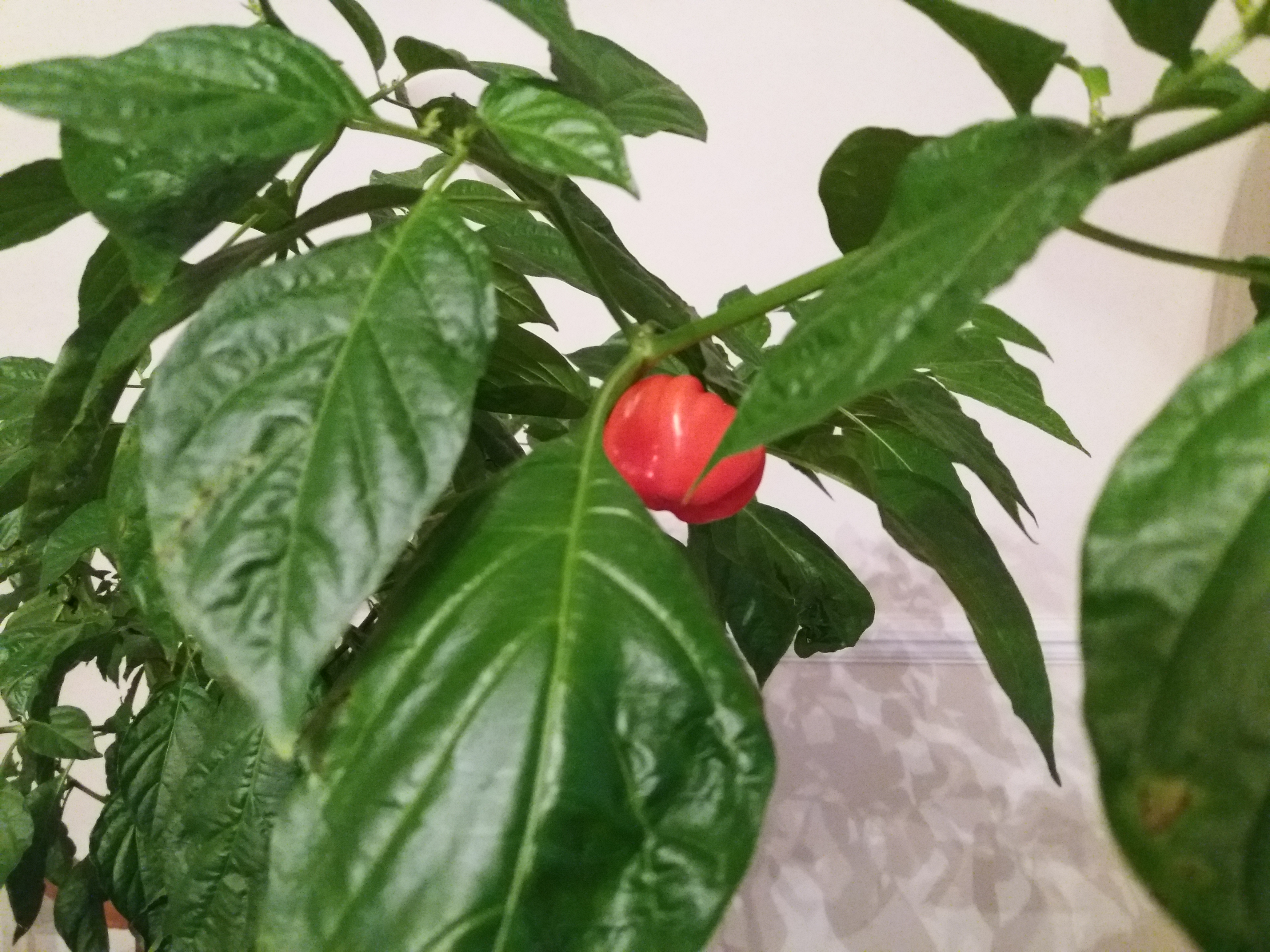
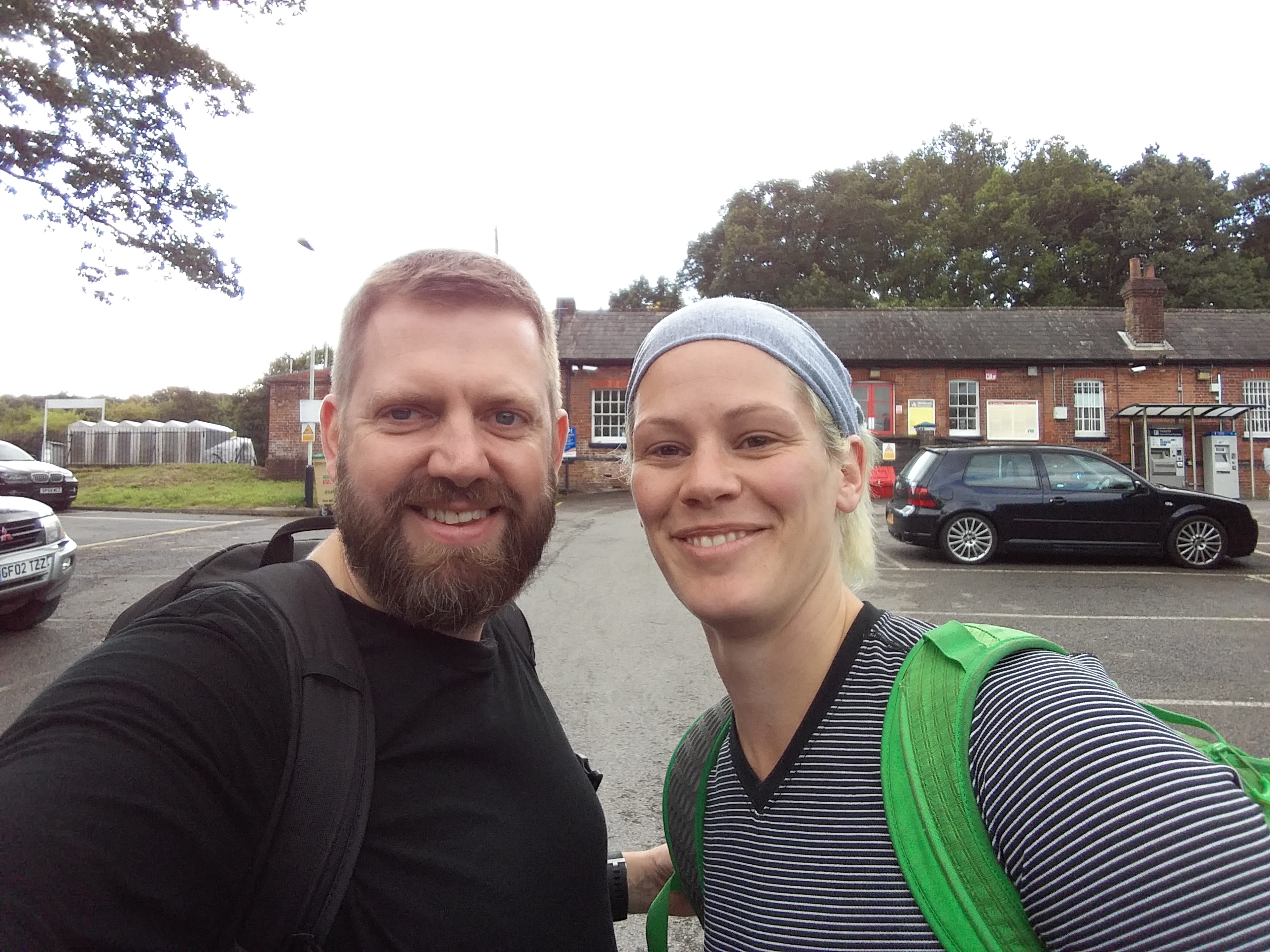
With all the travel I’ve been doing lately, I had to find someone else to look after the plant. The photo at the top of the page shows me carrying the plant across Hove. And, a few days after the plant left my house, I received a video from the friend looking after it. The blurry short piece of footage reveals something unexpected. Look close at the centre of the picture and you can just about make it out.

Among the leaves is a tiny green Scotch bonnet pepper. The minute my back is turned, a fruit appears. All this grief for a single pepper, when I could buy a fresh one for pennies. A whole pound would buy me a bottle of Encona. It seems a lot of work for little payback.

The friend who was caring for the plant is away for a few weeks, and I’m not sure if they’ve made arrangements. Maybe they’ve given the plant to someone else to look after.

My lounge does feel emptier without her though, and it would be easy to be reunited. I really should find out where my chilli plant has got to.

In the early days of the curry house

Around the time that the Guardian published Bee Wilson’s article Who Killed the Curry House, it also republished an article from 1957, Rising popularity of Indian restaurants in Britain. At that time, Indian food was still a novelty in the UK. The article is an interesting read, positioning curry as a new thing to the British while noting a very well-informed audience for the cuisine.

When you have missed the homeward bus… a Northern city can be an inhospitable place. Once there was nothing to do and nowhere to go: now there are Indian restaurants. In the middle of every night, Sunday or weekday, when the cafes and steak houses are shut and their waiters asleep, egg pilao and Madras chicken curry, Bhuna Gosht, Kofta, Jelabi, and Poppadum are coming to birth, filling and astonishing the mouths of those who always miss buses, all over Britain.

There were estimated to be a hundred Indian restaurants in London at that time, a dozen in Manchester, with more spreading over the country, including “towns as unlikely as Northampton“. A brief history is given, with Veeraswamy mentioned, as well as the Koh-i-noor, which opened in 1929. Indian restaurants from that period sound like strange places:

In those days the clientele was limited mostly to the homesick prince, or the lover of the exotic: at one time or another most of the Indian rulers called and fed, with their retinues. Running up accounts with these private armies of secretaries and musicians and doctors was a nervous business, for occasions arose when master and retinue would refuse to pay, both arguing that it was the other’s responsibility. At such moments the proprietor of the Koh-i-Noor would call upon the services of a solicitor in full morning dress, with silk hat.

Many of the 1957 customers were discerning: “The proprietors are at once troubled and delighted by a class of gourmets who raise an instant fuss if they are given Italian rice instead of Siamese first quality, who know and are angry if the spices have been added a minute too late in the frying stage.” It seems that many people had developed a taste for Indian food during the war.

The first person to open an Indian restaurant, Sake Dean Mahomed, is buried in Brighton. However, he had given up on catering before he moved down here, making his fortune by running a bathhouse. However, curry in Brighton was well established by the time the article above was written. According to Rose Collis’s New Encyclopedia of Brighton, the first Indian restaurant to open here was the Taj Mahal in 1948 in Ship Street. (She also notes the Agra Balti House, the ‘first authentic Balti house in Sussex’, opening in 1993).

I Hate the Internet

I first heard about Jarett Kobeks’ novel “I hate the Internet” from John Higgs, who  told me about the book’s comparison between corporations making money from user-generated content and the publishers that stole from Jack Kirby. As the book puts it, “The business practices of the American comic-book industry have colonized Twenty-First Century life“. Kobek goes on to say that “The only difference being that Marvel, like, you know, actually paid Jack Kirby before he was screwed. Twitter didn’t pay its creators.” John described the book as being more of an argument than a novel, but it appealed to me. It’s also apparently the first self-funded book to be reviewed in the New York times.

The book explicitly claims that it is a bad book: “The writer of this novel gave up trying to write good novels when he realized that the good novel, as an idea, was created by the Central Intelligence Agency. This is not a joke. This is true.” As Kobel explains, “the CIA funded both The Paris Review and the Iowa Writers’ Workshop, the latter the prototype of a swarm of creative writing courses” Vice recently published an article, How the CIA infiltrated the world’s literature,  which gives some background on this.

I read the book in one go. It’s the sort of novel I love, falling into the category described by David Shield’s Reality Hunger, blurring non-fiction with fiction. It’s also very much a meta-fiction: one chapter is abandoned in favour of a summary of the arguments it was meant to make. It’s written in a similar mode to Kurt Vonnegut, albeit more cynical (there is even a science fiction writer among the characters, with the plots of his books described).

The novel is mostly a collection of rants about the modern world. It contains some vicious critiques of social media, all despairing: “How do you reason with people who make arguments about human dignity on machines built by slaves in China? How do you reason with people whose primary expression comes pre-branded by Twitter?

One of my favourite aspects of the book was its references to comic books. At one point, the Internet is described as “a wonderful resource for artist engagement, expanding a fan base, and reading about the feud between Alan Moore and Grant Morrison“. The last of these is a subject that has fascinated me – I was one of the supporters of the Last War in Albion Kickstarter, which produced the first volume of an epic history of this feud. The book’s description of Grant Morrison is harsh but amusing:

“Other than the oodles of quality which seeped from his work, Morrison’s principle distinguishing feature was that he had the bad luck of being a comic-book writer at the same time as Alan Moore. To paraphrase the preeminent comics critic Andrew Hickey… if Alan Moore had not existed, Grant Morrison would have been considered the single greatest writer in the history of the medium”

There is a definite danger in how social media overwhelms our communications and culture. In 2017, having a blog feels anachronistic. As Facebook, twitter and Medium expand, content gets boosted according to how well they achieve these company’s aims. A good example of this is the article The Three Reasons Youtubers Keep Imploding. I’m not sure what the answer is, although the Indie Web offers a glimmer of hope.

The Guardian interviewed Kobek in December. It was a fairly depressing read. Kobek said:

Interviewer: Reading your book made me think that we simply haven’t even had the language to criticise the internet until now. That there’s been no outside to the internet. No place to oppose it from…

Kobek: I think the outside is publishing, actually. I mean publishing in the most Platonic sense of the word, rather than the squalid industry that we have. I think that books actually can be anything. Publishing’s response to the internet has been completely pathetic, but God, if there’s going to be an opposition, a response, it’s not going to come in the form of tweets

Maybe the future is zines, maybe it’s something else. By the end of the book I felt quite despairing, and emailed John Higgs to tell him so. And, he reminded me there are good things about the Internet, and Kobel’s critique is not the only way of looking at things. “Pessimism is easier, of course, but pessimism is for lightweights”.

But Kobek is right, there is a problem to be faced here. As he said in his Guardian interview:

we live in a very dark moment where if you want to be part of any extended conversation beyond a handful of people, you do have to sign on to some things that, ultimately, are very unpalatable. Every era has its unanswerable questions, so maybe the thing to do, which is what I did in the book, is to just acknowledge the inherent hypocrisy of all of it. Though maybe that’s an easy dodge.

Theresa May’s “Curry Curse”

Last week, at the Brighton Fringe, I went to see Chris Parkinson‘s new poetry show Unpopular Culture. Chris also appeared as the support act, with his talk on the Eating Habits of Politicians. It’s a great piece, featuring Thatcher’s obsession with eggs, how to eat a hotdog, and that bacon sandwich (which apparently gets several pages in Labour’s internal report on the 2015 election).

One thing I’d not heard about was the story of Teresa May’s local curry houses. Many Indian restaurants have ongoing problems with staffing and are restricted from hiring overseas experts because of Britain’s immigration laws.  This has become particularly controversial after last year’s Brexit campaign. One group of restaurateurs supported leave, partly in the hope of allowing more non-EU immigration. Pasha Kandaker, head of the Bangladesh Caterers Association, was reported as saying “My organisation supported Brexit for several reasons but the main reason was to bring people from abroad to help our industry to survive.”

Theresa May’s announcements after the referendum were the cause of much of this disappointment. But this is not the first time that Theresa May has been involved in curry-related controversy. Prior to being Prime Minister, from 2010 to 2016, May served as Home Secretary. She promised to bring net migration below 100,000 but despite this, migration continued to rise.

In May 2011, Theresa May opened a the Innovation Indian restaurant in her Maidenhead constituency. In March 2012, it was raided by immigration officers from the UK Borders Agency, part of the home office. Five suspected illegal immigrants from Bangladesh were detained. Innovation now appears to be closed and the website is down.

A report in the Daily Mirror goes on to say that eighteen months earlier “her ­favourite tandoori restaurant Malik’s in Cookham, near ­Maidenhead – where she signed the guestbook and was also pictured on their website – was raided and two suspected illegal workers caught. But the owner was not aware of their status.”

The Malik’s owners obviously bear no ill-will to May for what happened. She is still featured on the restaurant’s website of  as part of a gallery of stars who have eaten there – although she appears far below 80’s children’s TV stay Timmy Mallet.

Situationist Painting in the Tate

IMG_20170318_120552

A few months back, I went to the Tate Modern with my friend Sophie and found a surprise in the galleries – a painted strip of paper on a roller. It was a piece I’d read about but hadn’t realised was on display. This was Pinot Gallizio’s Industrial painting from 1958, made on a piece of canvas, rolled up and intended to be sold by the meter.

One of the most fascinating thing about the Situationists is how relatively little work they produced to demonstrate their theories. Much ink has been spilled on DeBord’s psychogeography, for example, but the groups associated with him produced few examples of the form: their practical work is far outweighed by their ideas.

Gallizio described himself as “archaeologist, botanist, chemist, parfumer, partisan, king of the gypsies” – to which McKenzie Wark suggests adding “chancer, amateur, dandy and dilettante”. He is famous as one of the founding members of Situationist International. The group was formed in July 1957 as a unification of several small avant-garde groups. One of them, Ralph Rumney’s ‘London Psychogeographical Association’, was formed on the occasion to make the event look more supported than it was.

Gallizio’s ‘Industrial Painting’  was first exhibited at a Turin Gallery in May 1958. The painting was unrolled and stuck on the walls, with sections sold by the meter. Models paraded in the gallery wrapped in the fabric. As well as being sold in the gallery, sections of the fabric was sold in a street market.

Another of Gallizio’s fascinations was gypsy communities. He offered a home to a gypsy community and this inspired Dutch artist Constant Nieuwenhuys. A recent article on Atlas Obscura detailed Nieuwenhuys’ work on nomadic architecture and his playful and visionary city designs.

Gallizio’s work was intended as a protest against the commodification of art. he produced original work through mechanical means, offering it for sale by the foot. But everything gets recuperated. Gallizio’s work is now an artifact, to be expertly displayed in a gallery. Maybe it should be chopped up and sold? Sections handed to people as they enter the gallery. Maybe the idea of this piece is more important than the piece itself.

IMG_20170318_111545

The North Downs Way Stage 3

(This walk was actually at the end of April and is the most recent stage of the North Downs Way. Progress has been slower than we’d like, but we should be finished in the Autumn)

katharine_18157946_10155188988775283_7361763370397169657_n

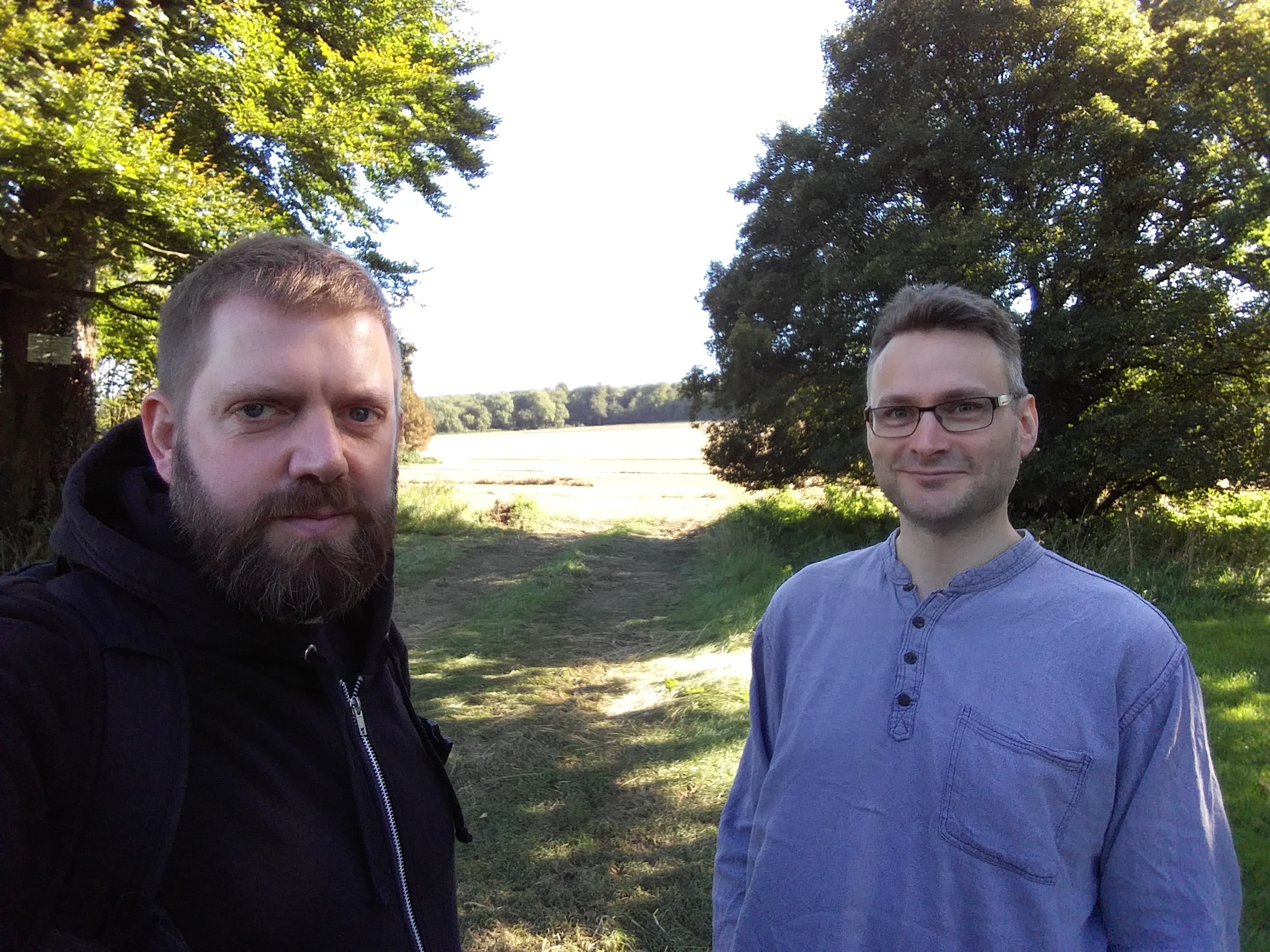
1 – The third stage of the North Downs Way was an odd one. The scenery was slightly underwhelming compared to the previous sections. Cramped accommodation and long days made tempers fray – finding suitable places to sleep has become more difficult, as has the logistics for the start and end of the trails. And there was something odd about the whole weekend. The death of my phone at the start (which also meant no camera) felt like an omen. I passed through the five stages of grief about the device as the weekend continued. The photos here were taken by Katherine (except for one).

katharine_18194955_10155188818465283_9222185013532509258_n

2 – It took a long time to find our way back to the Way. I parked my car on a country lane and we followed a road route to the trail. It looked all right on the map, but turned out to be a fast road with no pavement hedges either side. We kept in close, cars forced to go around us.

katharine_18193866_10155188819325283_6847976361646580084_n

3 – The overall impression of the walk was the bluebells. The first day we walked through places thick with them. We saw fewer bluebells on the second day; Bluebell Hill wasn’t.

katharine_18198470_10155189102905283_4674164912789384381_n

4 – We crossed the Medway at the start of the second day. It’s an impressive bridge, passing high above buildings and water. Racist graffiti was scrawled on the Samaritans sign, “All w–s and non-UKs can jump”. The small sad ways that national politics stirs up local hate.

katharine_18199112_10155189103820283_3467294717008482169_n

5 – Travelling further along the trail, I begin to confuse the cafe and restaurant staff. They assume one of the women has ordered the vegetarian breakfast, and put meat in front of me. When they enter a restaurant ahead of me, I get asked how many of us there are. And they assume I must be drinking beer not wine.

romi_18193956_10158607723780597_5290421697746038392_n

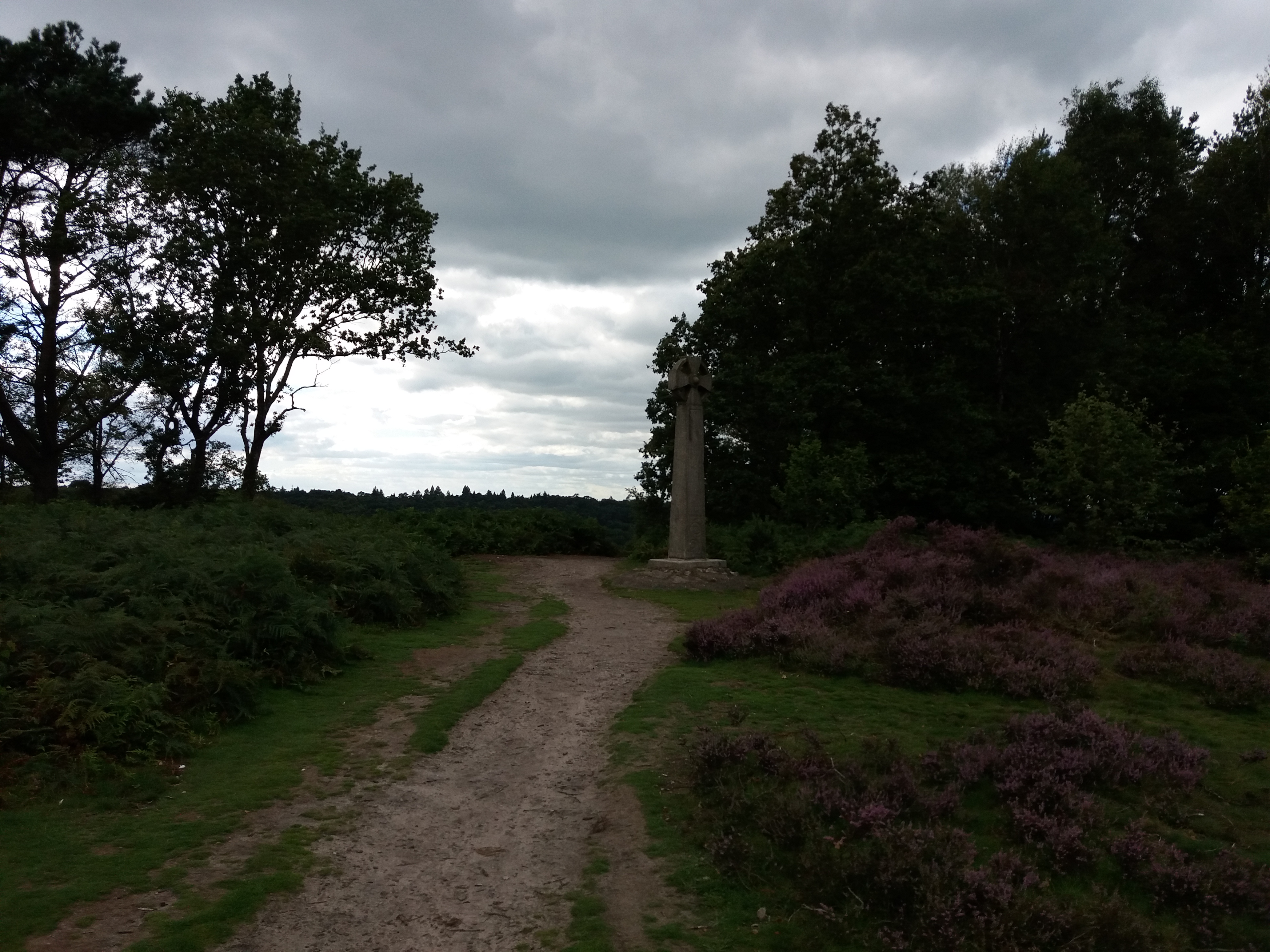
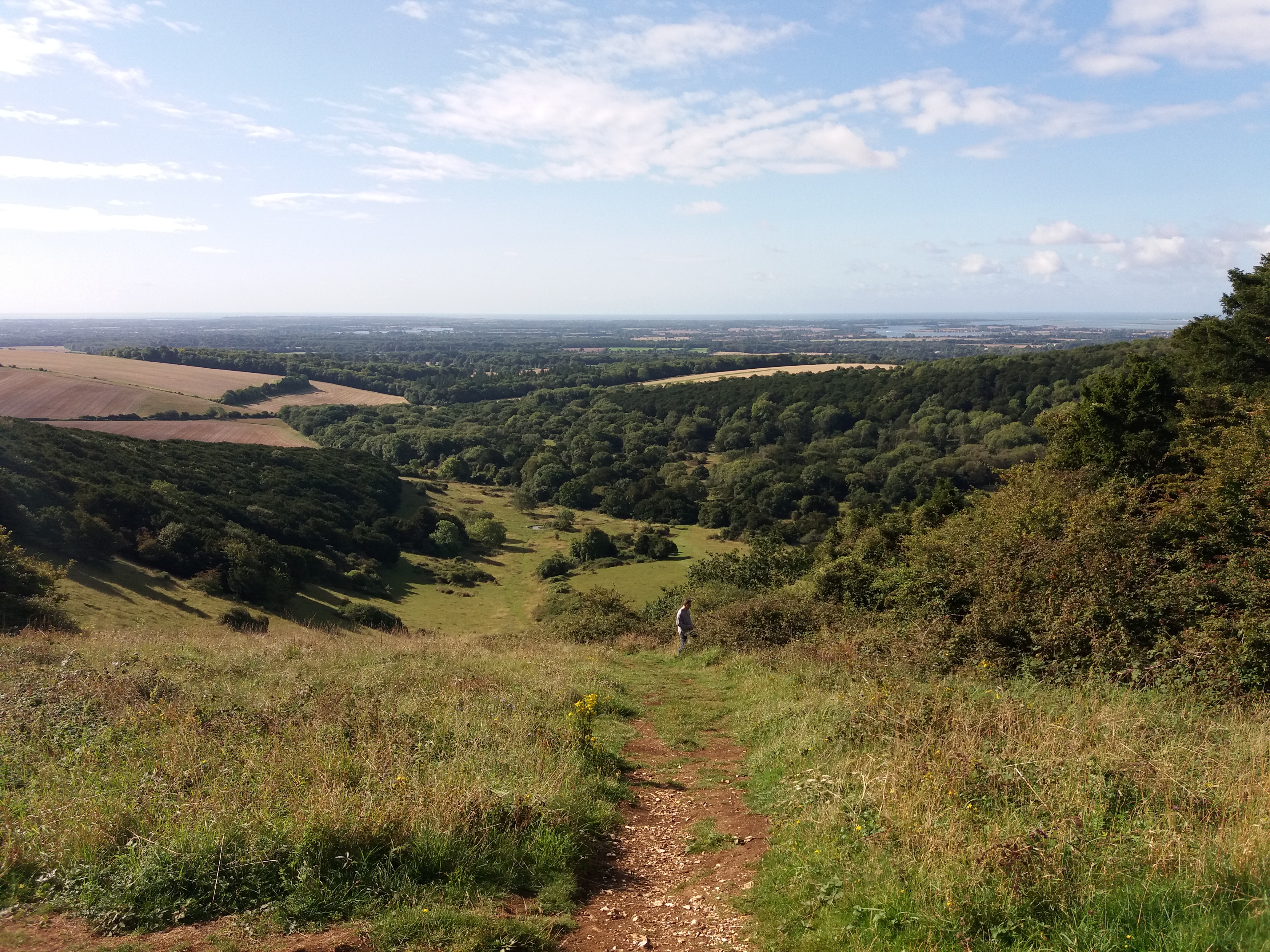
6 – It was a good walk. We walked through dandelion druff in the morning air, and in the afternoon the air was thick with fat flies. I loved the cross on the edge of the hills, a pack of wild horses standing nearby. As usual, I was surprised at how few people were out on the path. The contrast between these trails and the city I live in is massive.

katharine_18157054_10155189106215283_7499493675509447813_n

7 – Hidden by the side of the path, a cache of books for sale.

katharine_18157932_10155188988125283_1054267151103088087_n


Twin Peaks: There’s something wrong with the moon

I first watched Twin Peaks on TV in the 90s and caught Fire Walk with Me on its original run in 1992, sneaking into Brighton Odeon underage. I left the cinema confused, but it’s grown to be one of my favourite movies. Over the years since the show’s cancellation I’ve puzzled away at what it all meant and even recently I’ve spotted new things. I’ve rewatched it a few times, with a Twin Peaks Club about five years back, and another club in preparation for Season 3. Here are some thoughts on my latest watch-through:

  1. When I first watched the show, characters like Shelley and Bobby seemed like adults. Now, a couple of decades on, I can see how young and vulnerable they are.
  2. Also more apparent on this watch-through is how much Lynch is playing with soap and noir cliches. When I was younger I didn’t always know the cliches – I’d not encountered all the archetypes. Only now can I see how much of it is being played ironically – although being Lynch, it’s irony without sneering.
  3. I’m not the first person to point out that Twin Peaks was the start of the ‘golden age of TV’ – along with Babylon 5 (which gets far less credit than it deserves). They demonstrated that people wanted complicated and ongoing narratives.
  4. Twin Peak’s reputation is particularly remarkable, given how bad some of season 2 is. The show lost its way badly. As one example, the Japanese character,Mr Tojamura, seems particularly offensive now. And, as much as I like the character of James, he is very poorly served by the plots that he is given.
  5. I loved how implausible the world of the show was. The Roadhouse seemed incredible, with all those bikers slow-dancing to Julee Cruise songs. And the jukebox at the diner is incredible – who was picking that music? I don’t know if it is the larger budget, but while the present-day roadhouse is a lot busier, it seems to have lost some atmosphere.
  6. Even now I am still spotting details in the show. Watching Fire Walk With Me, I noticed that the woodsmen from the convenience store scene do not appear together in the credits. One of them is in the film earlier, in the diner scene.
  7. The timings of some of events are messed up by the structure of each episode being a single day. The speed of James’s relationships is dizzying. He is heartbroken by Laura, falls in love with Donna a day or two later, and a few days after is falling in love with Maddy.
  8. There is something wrong with the moon. This is another problem made apparent by the episode-a-day format. As night falls in Twin Peaks, more often than not, the events are watched over by a full moon.

The ending of season 2 was mind-blowing. With the series being dropped, Lynch was brought in to do a final episode and round things off. Instead, he set up a series of massive cliff-hangers. It was hard to believe the show had finished with that final shot. Then came the news about season 3 which, after all the backstage drama, has finally reached the screen. In the original show, set in 1989, the spirits tell Dale Cooper that they will see him again in 25 years. It’s been a little  longer than that (the final episode was shown in June 1991) but finally getting to see the next episode is an amazing thing. I could hardly sleep with excitement the night before. The new series looks to be as strange and difficult as expected. As the Daily Mash joked, people who pretended to like Twin Peaks first time are facing a very difficult summer

Three Rules for Writing

Back in December, while walking the Downs Link with Kaylee, she asked me about my writing. During the conversation I explained that the biggest improvements in my writing came from three simple rules. She emailed me yesterday to ask me to remind her what they were. I thought I’d put them here.

Rule 1 – Never use adverbs

I first encountered this rule in Stephen King’s book On Writing. Any time an adverb is used, there’s a stronger single word that can be used. ‘Walked quickly’ can be replaced by ‘rushed’ – or ‘dashed’, or ‘scurried’; ‘said loudly’ can be replaced by ‘shouted’ – or ‘boomed’ or ‘yelled’.  Leaving out adverbs makes the writing tighter. English has a massive vocabulary available so losing the adverbs isn’t much of a constraint.

Rule 2 – Edit by reading aloud

Reading a text aloud slows you down enough to spot more mistakes. It’s also good for spotting when a sentence is too long. If you feel awkward or breathless as you read it, add a full stop somewhere. You’re also more likely to spot words that you’ve used too often (my greatest weakness).

Rule 3 – Write simple

Pick the simplest possible way of writing your sentences. Which isn’t to say to never use long words – if phosphorescence is the only word that will do, great – but you might be as well off with glow. Lovecraft is the classic example of this, someone who is a great writer despite their vocabulary, not because of it.


None of the above rules are revolutionary – they’re fairly common instructions. But they are all things I wish I’d known sooner.

There are also other ‘rules’ I follow: don’t use the passive voice; never start a sentence “There was/is”. I also like the rule Tim Clare often talks about where you put the most interesting part of a sentence at the end.

Having said that, there are lots of common rules which, I think, are applied too often. ‘Show, don’t tell’ is a good rule for certain types of voice, but it’s not absolute. Someone like Vonnegut makes his books much more entertaining by telling the reader the story – you know, like an actual storyteller.

The Pennine Way Day 4

IMG_20170515_085055

1 – Day 4 of the Pennine Way started with one of the most difficult bits of hiking I’ve done. The forecast had predicted rain, and I’d hoped that we would be lucky and the storms would pass us by. No such luck. We set out in wet-weather gear, heading into town with Emma and Charlie. After separating, Dave and I followed the path along the canal. Soon after, it took a steep turn uphill.

IMG_20170515_092413

2 – If Dave had suggested jacking it in at that point, I would have gladly done so. I’ve never been so close to giving up on a walk. Looking at the book last night, I learned that this was one of the most difficult ascents of the entire walk.

IMG_20170515_105746

3 – As the saying goes, there is no such thing as bad weather, only inappropriate clothing. We were lucky this was on our last day, as it was a good lesson. I’m going to invest in some better rain gear than my poncho. I’m also going to have a change of clothes waiting at the car for all future walks. Despite the rain, the day was better than pretty much any day that I’ve spent in an office.

IMG_20170515_121006IMG_20170515_121020

4 – One of the interesting things about a trail like this is that you hear about the people ahead of you. We knew there was an Australian woman ahead of us and we finally met her on the final day. We decided to walk together, which was an interesting change of pace (and conversation). The Pennine Way was the first of a series of adventures around the world that Carolyn had planned.

IMG_20170515_110249

5 – It turned out on this walk that Dave is incredibly good at recognising different types of birds. He also knows a lot about farming. I learned that it isn’t possible for sheep to deliver triplets without human intervention – without help, the third always suffocates. The sheep were full of bedraggled lambs, which Dave told were about a day old. Our group was silenced by the sight of a dead one in the grass.

IMG_20170515_114702 IMG_20170515_111315

6 – I need to do a whole post on walking and Lord of the Rings. Tolkein’s classic is basically a book about hiking with a load of battle scenes thrown in. I think this is something the movies got wrong, not paying enough attention to the walking. Our walk had its Tolkeinesque moments, with Hebden Bridge providing our hearty Rivendell-style welcome. And, tramping along the damp moorland paths, it was easy to recall the grim tramping of the second book.

IMG_20170515_121552_1 IMG_20170515_122347

7 – We crossed the moors towards Top Withens, a ruined famouse that is said to be the inspiration for Wuthering Heights – despite looking nothing like the house in the book, and there being no evidence for a link. A slightly sniffy sign protests its own presence, saying it is only there because of tourist demand. I was more than ready to take shelter behind the ruined walls. Fortunately Dave looked round the side and found a dry indoor shelter. I’ve been in posh hotels that felt less welcoming and luxurious than this hut with its dirt floor. It was so good to be somewhere dry for a bit.

IMG_20170515_124910

8 – We said farewell to Carolyn at Ponden and then walked on to Stanbury. A succession of buses and trains took us back to Edale where we’d started the walk. The first quarter of the Pennine Way was complete. We’re going to continue in September.

IMG_20170515_140309

This Way: Brighton, Lewes, Rottingdean

IMG_20170528_110840 (copy)

Some time back, a friend of mine produced a map of footpaths between Brighton and Lewes. I followed one of the two routes on my birthday last year. I’d not got around to doing the other, but needed a route to walk as practise for the Ridgeway (I’m walking with someone who has not done a long day’s hike). So, on Sunday, I walked to Lewes and back.

IMG_20170528_100626 (copy)

The route goes along Brighton seafront to Rottingdean before turning North and passing through the abandoned village of Balsdean. A path through a field of crops eventually leads to Kingston and Lewes. On the way back the route followed the Juggs Road for much of the way, re-entering Brighton near Woodvale Cemetary.

IMG_20170528_102645 (copy) IMG_20170528_103734 (copy)

It was a good walk. I exhausted myself and got sunburned, but it was so nice to get out for the day.The whole route turned out to be about 50,000 steps, which my fitbit claimed was about 22 miles. It’s probably nearer 18 miles and we did it quite quickly, not stopping for long breaks. We stopped for lunch in Lewes where we overheard a conversation at the cafe about the kitchen clock being slow. Apparently this always happens, because the works get gummed up with grease.

IMG_20170528_110353 (copy)

I’d somehow not walked Juggs Road before. This was the old route used to carry fish from Brighton to Lewes by donkey. It featured an impressively steep hill that nearly got the better of me on such a hot day. According to the Internet, a jugg is a name for Brighton fishermen, or a basket for carrying fish. The Revd WD Parish’s sussex dictionary suggests that Jug(g) is a generic nickname for Brighton people.

IMG_20170528_112418 (copy)

Once summer calms down a little, I am heading to Bath to try out the second This Way map.