Silicon Beach: What’s great about tech in Brighton?

Way back in October, I was invited to the inaugural Silicon Brighton event at the Eagle Labs building on Preston Circus. A series of events are planned, looking at different areas of technology. The group has three aims:

  1. To bring technical companies together with the town’s talent, with the aim of ‘upskilling’ both employees and companies, specifically by looking at areas and technologies that need more people.
  2. Providing a space to talk about the ‘future of work’, making companies more aware of what potential staff are looking for.
  3. Promoting Brighton as a great place for technology companies.

I’m cynical about the possibilities of Brighton’s position as a technical hub, and the promotion of ‘Silicon Beach’ (see Whatever happened to silicon beach and what are the challenges?). But there are a lot of great things about the town that keep me working in the area.

Below is a list of some of these good points. Please let me know anything I’ve missed. I’m happy to make additions, and the selection below is mostly based around what came to mind as I was writing. There is also a problem in Brighton of seeing who is doing well. For example, I have very little visibility of who is doing great things at Eagle Labs or the Sussex University Innovation centre. One thing Brighton does need is a way of broadcasting these successes better.

Companies and organisations

Much of Brighton’s reputation is built upon its vibrant freelancing/agency scene, but we do have some huge companies, with Brandwatch being one of the most interesting and successful. Other large employers include Unity and Legal and General, and there are some exciting mid-sized startups such as Incrowd and Inshur.

Organisations supporting local businesses include Wired Sussex and the local Chamber of Commerce. There are also some great initiatives in the town such as the Brighton Digital Exchange and the Digital Catapult, which is supporting a growing immersive technology scene. We also have two great universities, with thriving technology departments.

Meetups and events

Some of the national surveys that have scored Brighton highly have reflected the strength of our meet-up scene. Specific technologies such as Java, Azure, Javascript through the Async, and data science (Sussex Data Science Meetup) all have meetups. The Sussex Founders group and podcast is a particularly exciting new arrival.  There are also general meet-ups, such as the weekly freelancers farm. Codebar in particular is providing free training to being more diversity into the local tech scene. Other groups working to improve diversity in the local technology industry include She says.

Brighton also has some world-class conferences, including Brighton SEO and UXBrighton. The annual Digital Festival provides a particularly important showcase for the technology/creative scene.

Coworking centres

Brighton has been a pioneer in providing decent coworking space, with the Skiff recently having its tenth anniversary. Platform 9 is a larger, more recent player. There are also accelerators such as the NatWest Accelerator, with 80 startups in the current cohort. There are definitely room for more such organisations, as each of these spaces has a very different atmosphere.

The Town

The main attraction of Brighton is the town itself. As well as the seafront and a national park nearby, there are the attractions of the North Laine. It’s a buzzing area, despite the toll gentrification has taken. There are exceptional restaurants and a range of interesting festivals, including the Brighton Festival and Fringe in May, a comedy festival etc. Brighton is also an hour from London, meaning connections with the city can be easily maintained – while having a (slightly) cheaper cost of living.

Brighton has been declared ‘the most hipster town in the world’, narrowly beating Portland in Movehub’s survey. While this was a marketing device, the towns were scored on various objective criteria, such as vegan restaurants, coffee shops and tattoo parlours. While these things might not be to everyone’s tastes, they reflect a town which welcomes new things.

Conclusion

I have written a couple of posts that are cynical about the idea of Silicon Beach. But Brighton is a great town and does have potential. The main challenge is working out how to support growth that works within the town’s limitation.

The big success in Brighton has been Brandwatch. They’ve navigated the challenges in the town and achieved momentous growth. Obviously, there is the question of whether this is an exception that proves the rule, or if Brighton can support multiple such successes. I’m hoping for the latter.

Is John Wick set in the Matrix?

Last month, I watched John Wick 3: Parabellum. It’s a very stylised film, never settling for realistic when incredible would be more interesting. The action sequences are tightly choreographed and have an amazing rhythm, particularly the fight in the Knife Shop (see? fantasy above reality). But some of the scenes feel like video games. Watching John Wick and Halle Berry’s character kill wave after wave of enemy soldiers is sometimes repetitive. Berry’s character even has a highly-trained dog which she sets on opponents as a special move.

John Wick is not the first film where I’ve felt like I was watching someone else play video games. Ghostbusters III had monsters attacking in waves, before a larger end-of-level boss arrived. Or there are scenes in World War Z where Pitt’s character sneaks past zombies who are in little action loops like video game enemies. Maybe CGI makes this sort of thing inevitable, but it still feels strange.

John Wick has that video game feel. But seeing Keanu Reeves as the lead actor, with Laurence Fishburne as a supporting character, there is a more obvious reference here; it made me feel like I was watching the Matrix movies. Particularly since both John Wick and Neo make the exact same request at points: “Guns. Lots of guns.”

In the Matrix films, the human characters live within a simulated world which turns out to have been created based on the 1990s. Agent Smith explains during the films that the first versions of the Matrix were designed as utopias, where the humans lived with total happiness. “It was a disaster. No one accepted the program. Entire crops [of people] were lost.

So the machines had created an imperfect world, like the real one. But, as we see from the plot of the Matrix films, it’s not entirely successful. When Morpheus recruits Neo, he asks him if the world seems entirely real.

“You’re here because you know something. What you know you can’t explain, but you feel it. You’ve felt it your entire life, that there’s something wrong with the world. You don’t know what it is, but it’s there, like a splinter in your mind, driving you mad.”

The 1990s-based world didn’t work out well for the machines. The humans still realised something was wrong – or at least a few of them did. These people were driven to carry out shocking acts of violence in the Matrix. Maybe a new Matrix would be built, more suitable to these people. One that allowed them to indulge their violent fantasies.

I’m not the only person to have said this, but John Wick is Neo. The 4th John Wick film and the 4th matrix film are going to be the same movie.

The Money-Burner’s Tale

Jon Harris, aka the Money-Burner, recently published an account of the Cerne2CERN pilgrimage, Barefoot in Bollingen. It’s a great essay, threading together a number of themes.

The pilgrimage was a strange and significant event for me, and one I don’t yet understand; but I’m OK with taking a long time to absorb what happened. Those few days were like nothing I’ve done before. I’m taking my time to interpret and understand the events, and seeing the writings and responses from other pilgrims is a part of this.

One of the many aims of the pilgrimage was as an action to eliminate ‘story as we know it‘, an idea raised in Daisy Campbell’s show Pigspurt’s Daughter. But there were a lot of other aims, and whole networks of meanings and correspondences. To quote Jon quoting Daisy quoting Bill Drummond, ‘As to why, if we knew why, we wouldn’t be doing it’.

Jon’s essay explains why we went barefoot in the final part of the journey to Jung’s garden; it was related to the procession of the Crown of Thorns into Paris. The essay also talks a lot about ritual, something I’ve been thinking a lot about, particularly in relation to the Loops performance. I was particularly taken by the idea that ritual should be about more than producing an effect:

In my own Rituals I’ve found that the more I can let go of the idea that a Ritual has a function — that it is for something — the more powerful it is. What I mean by ‘powerful’ is that it sits more solidly on its own fixed point and so exerts a greater pull on the vortex of synchronicities that surround it. It pulls them into being.

There are other things I love about the essay. I love the glimpses of the pilgrimage’s logistics –  as someone who’s worked as a project manager, I learned a lot from seeing Jon and Daisy work. I have no doubt that those lessons will emerge in upcoming IT projects. But, swerving from the essay to talking  about myself, the piece also made me rethink my writing.

Story tends to be focused on in a lot of writing, even in non-fiction works. The first creative writing course I did focused on literary fiction and we were taught to fold everything into a plot. But story can be unsatisfying – particularly when all of it is based around a limited range of models. For example, Save the Cat dictated the plot of many recent Hollywood films. Jon’s piece made me realise that the writing I’ve loved most over the past few years is not about telling a story as such. Indeed, while it is ‘about’ the pilgrimage, that’s more in the sense of ‘writing around’ than telling its story.

Reading this particular essay made me realise how much I love writing that builds networks of ideas. These sorts of symbolic connections seem to particularly emerge in writing informed by magic, manufacturing (revealing?) meaning in the connections. As specific examples, I’m thinking of John Higgs’ book on the KLF,Cosmic Trigger or Promethea. There are more interesting ways of writing than telling stories.

A mystery in Stanmer Park: the ceremonial staff resting place

Sometimes, you find interesting things.

One of the big problems with hiking around Brighton is that it’s boring. The land here is arranged in strips. You have the sea which takes up 180 degrees. Then there is the prom, which is a nice walk, but I’ve done it literally a million times. Beyond that there is a strip of town, and it’s hard to get out to the country without trudging through it. Then you have the downs, which is a truly beautiful area, but there are certain east-west paths which tend to dominate. On the other side is the weald, which is full of interesting walks, but you’ve tracked about 5 miles to get there.

Any interesting diversion on these paths is welcome. I was coming from Ditchling Beacon and trying to find my way to Falmer campus, and wanted to get my walk over as quickly as possible. I’d walked from Patcham to the Chattri at the start of the day, taking an Uber to reach Patcham, as the walk the the bottom of the downs was so boring.

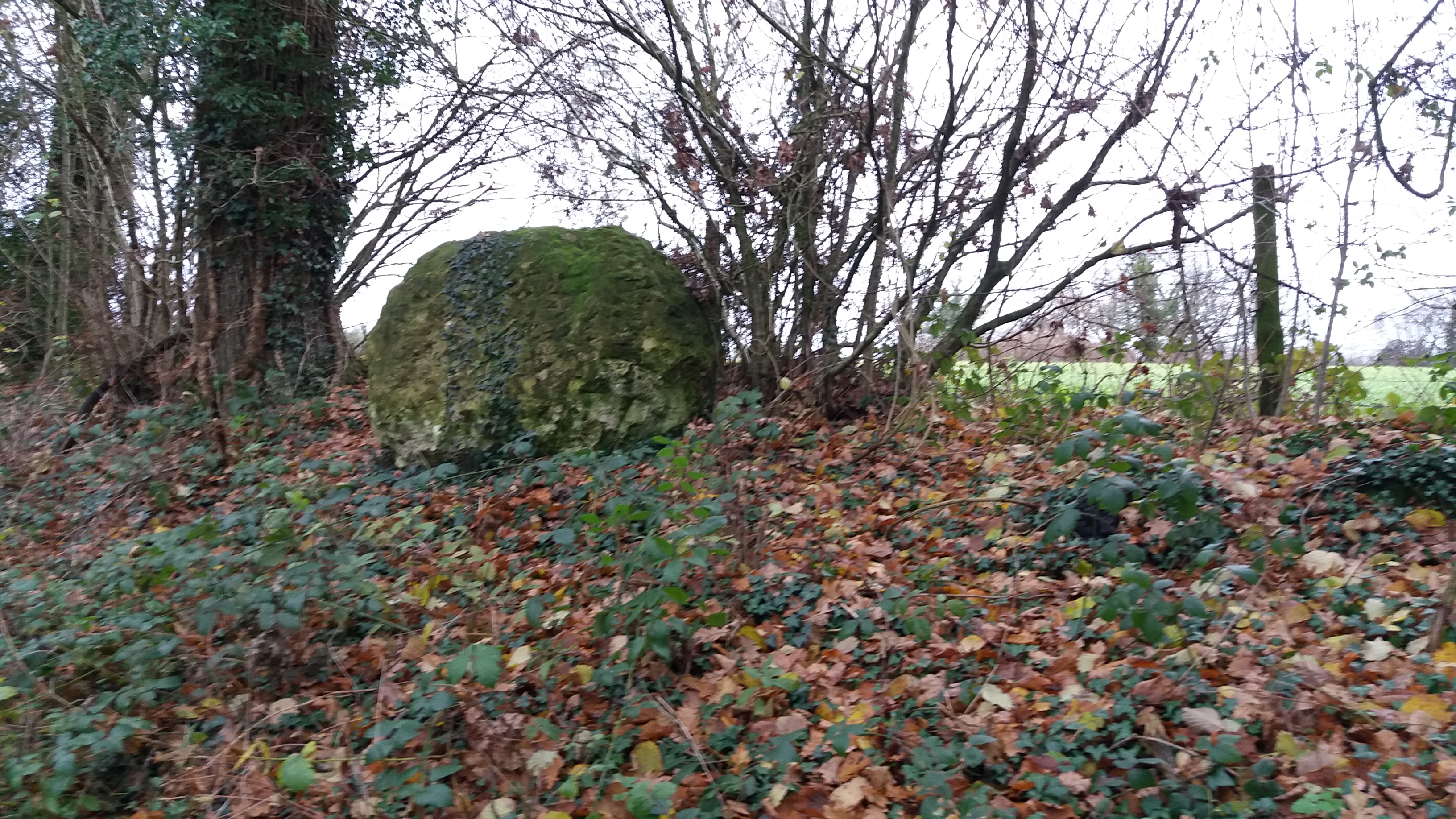
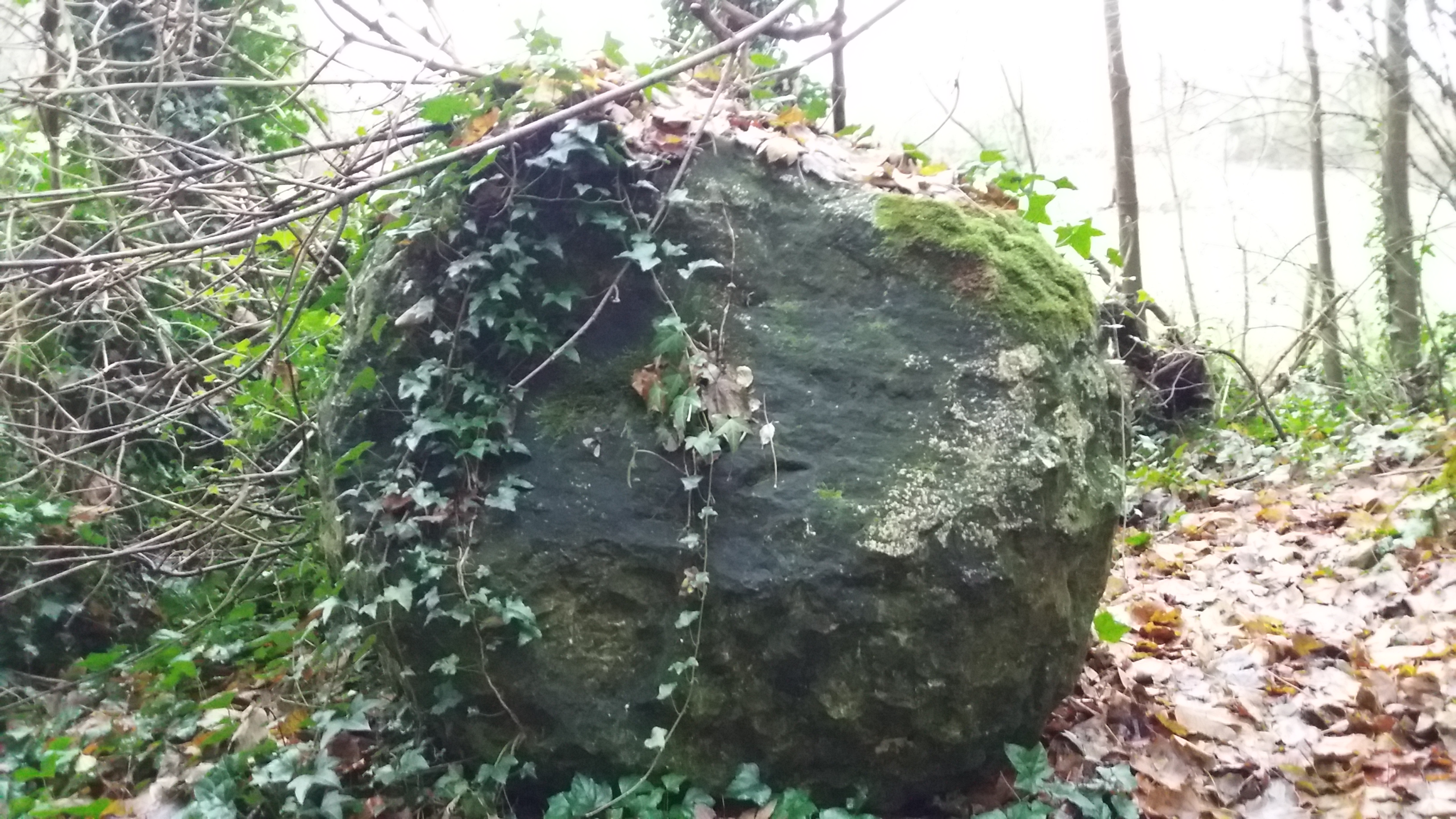
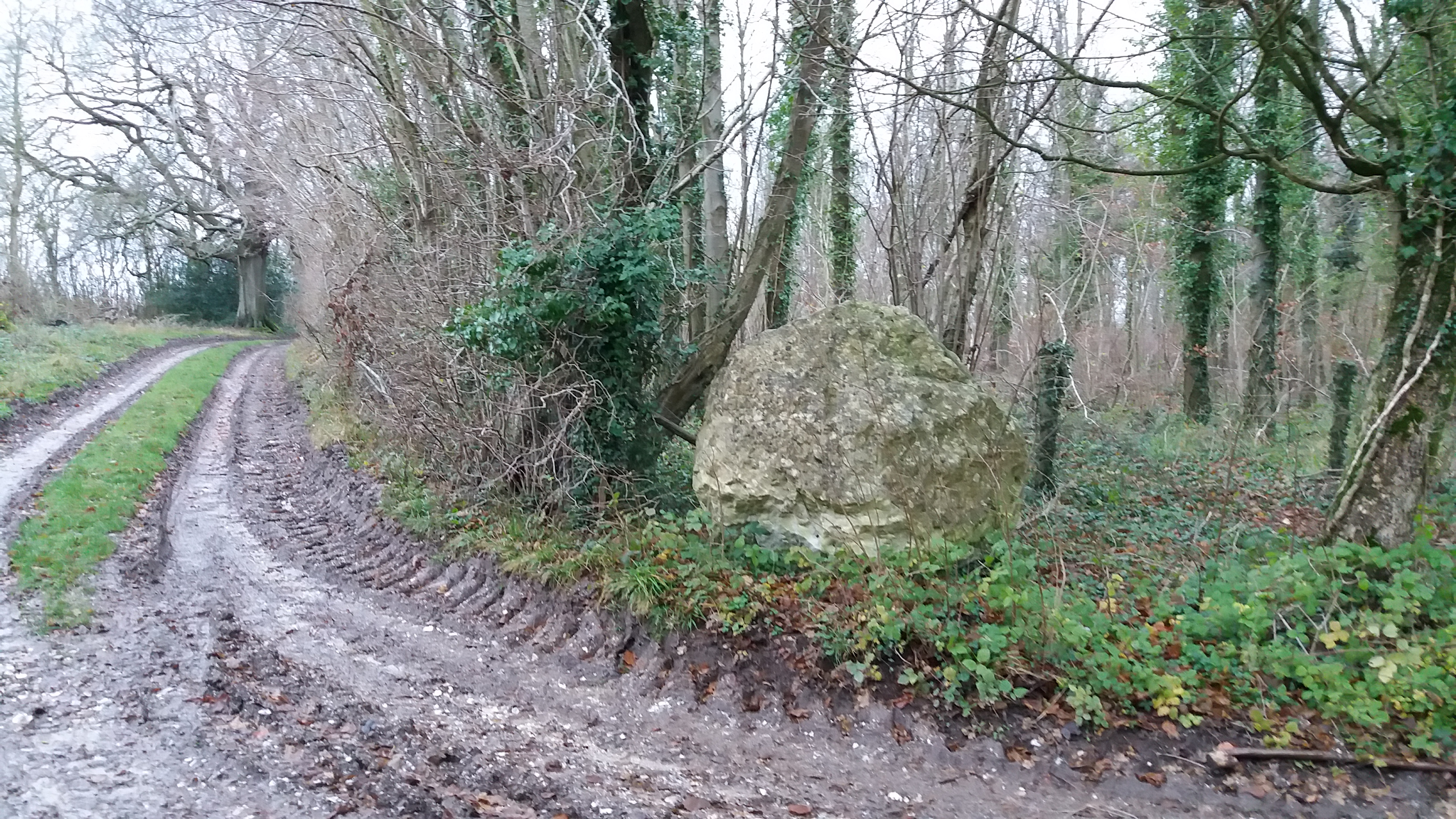
I was using google maps to find a direct path when I saw something interesting. On the map was listed a ‘Ceremonial Staff Resting Place’. The google maps marker was placed somewhere in the midst of a set of trees on a steep slope.

I know mobile phone GPS can be somewhat unreliable in the middle of nowhere, but I walked back and forth on the wooded hillside for a while, seeking some indication of what this marker might be for. I couldn’t find it, and after twenty minutes of searching had to give up.

It’s still listed on google maps, under the category “Home goods store.” I love how, even with electronic maps, there are still mysteries. Does anyone know what this might be?

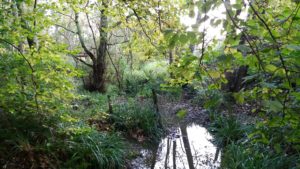
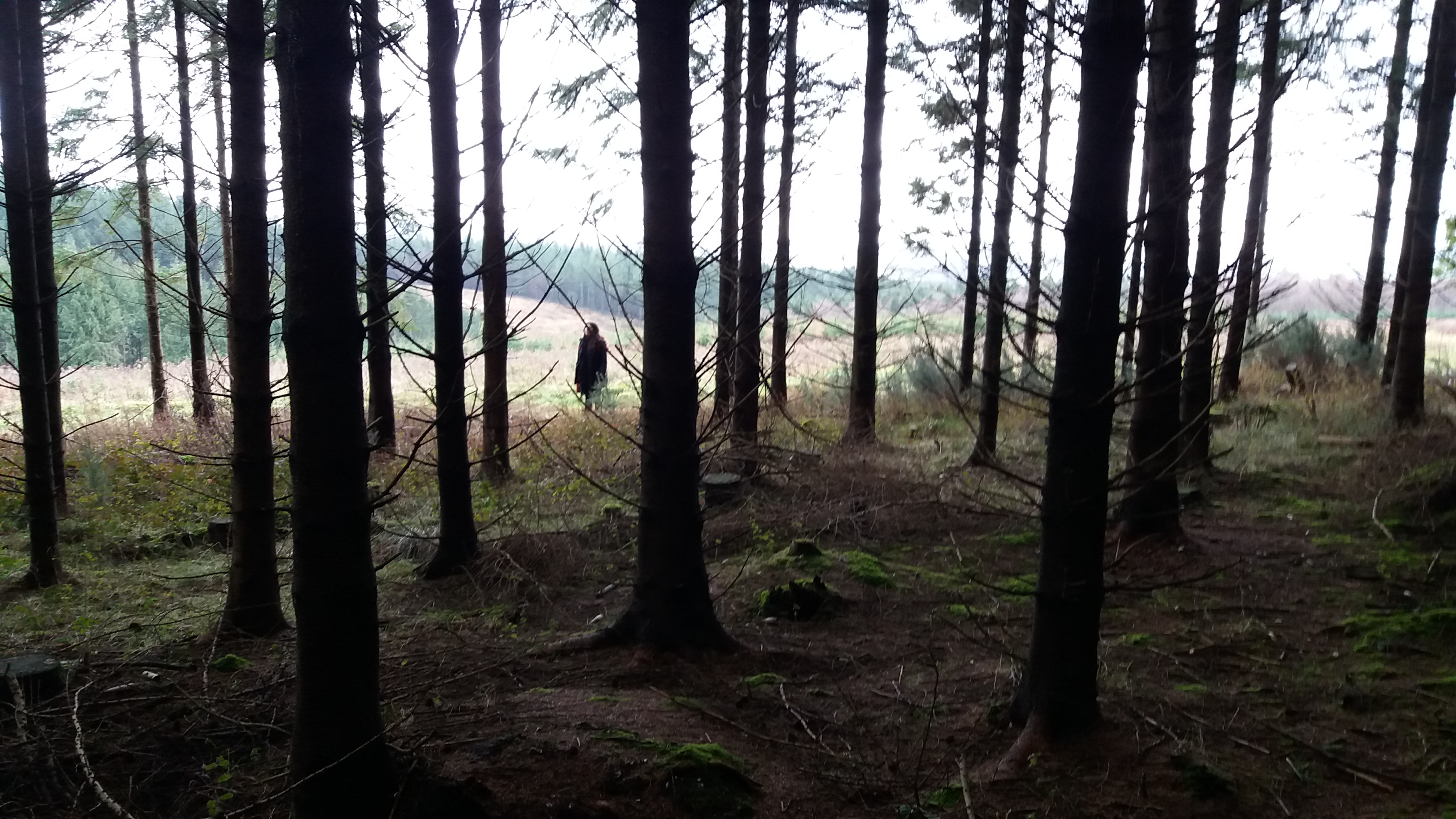
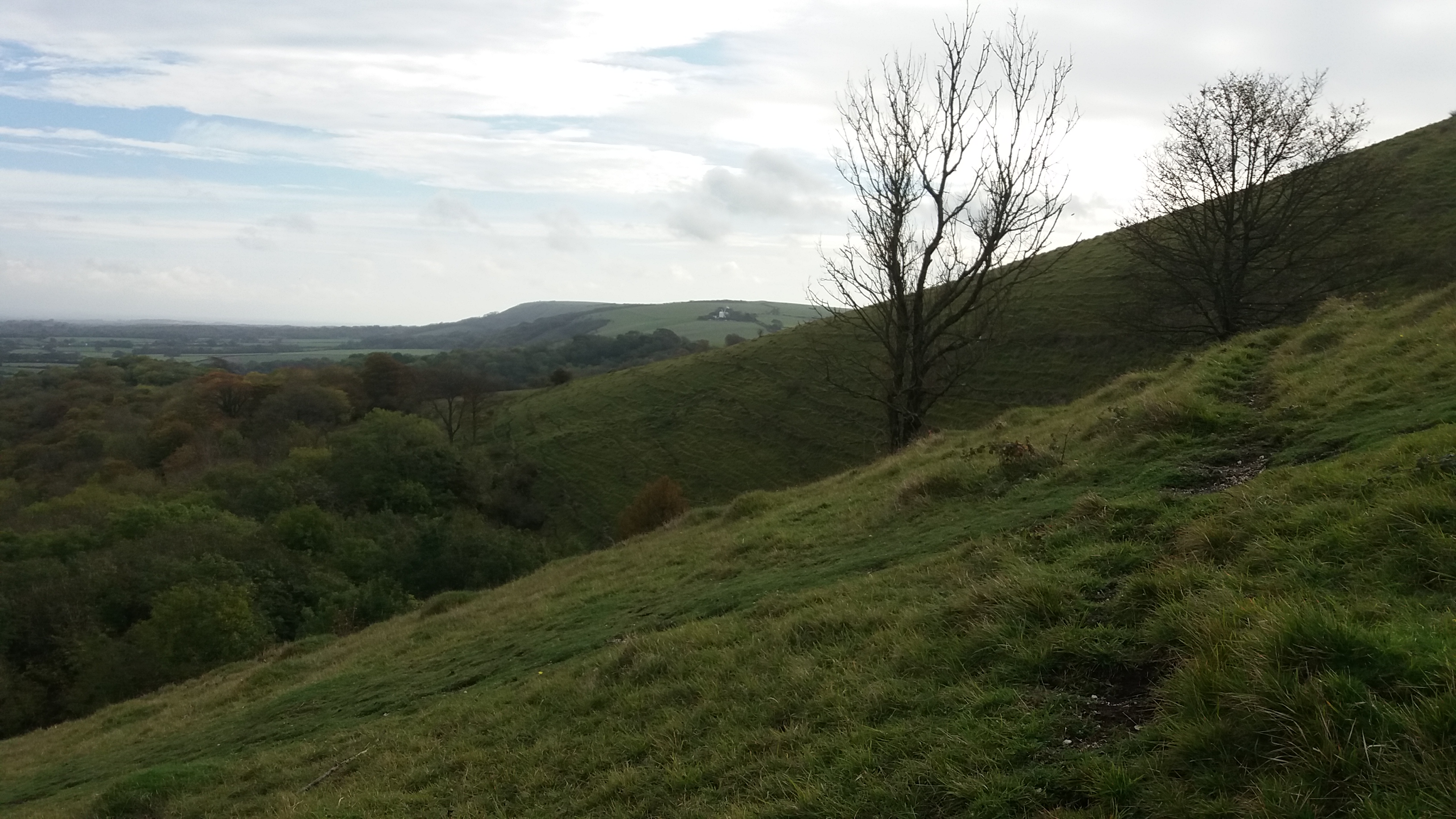
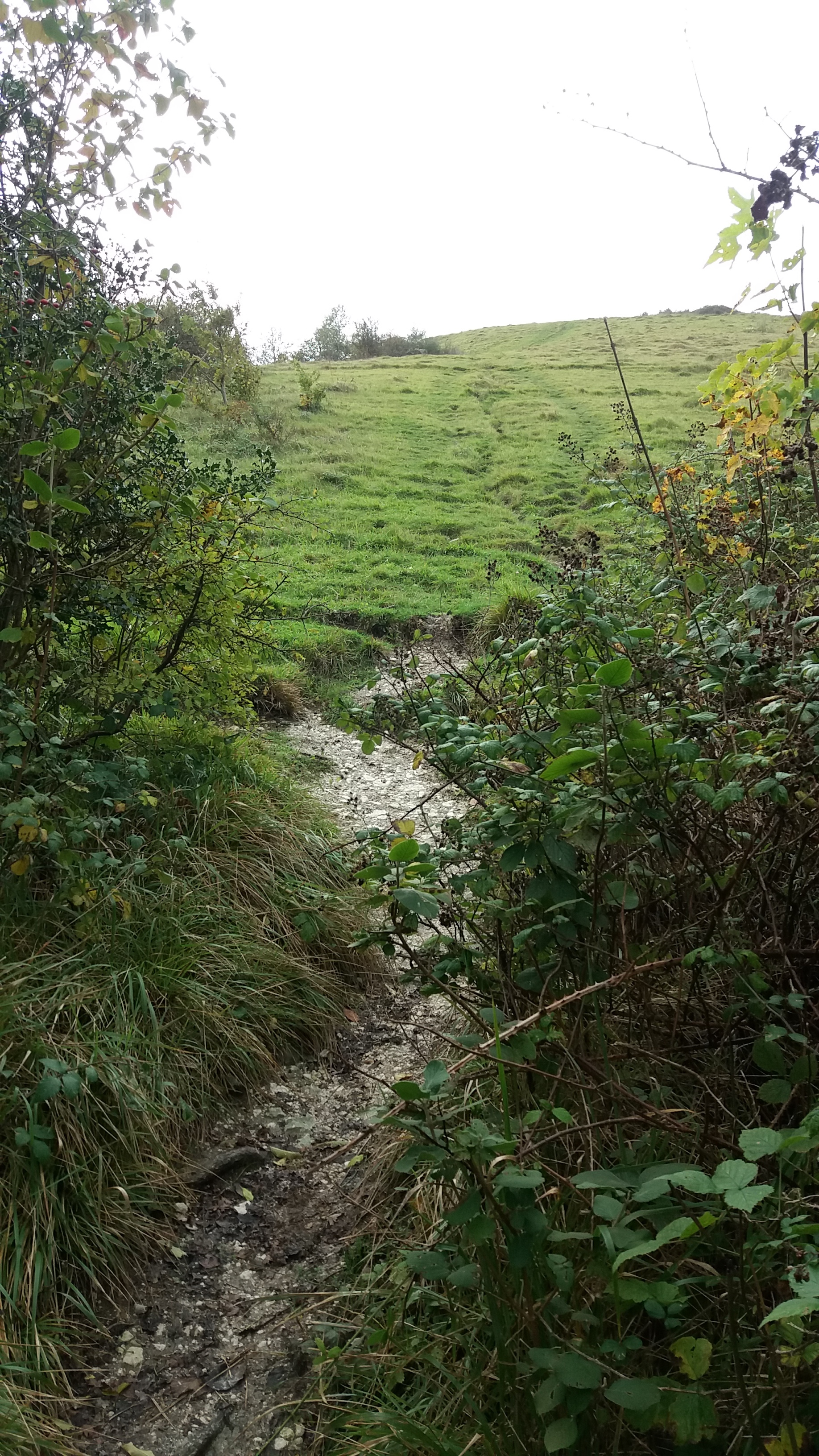
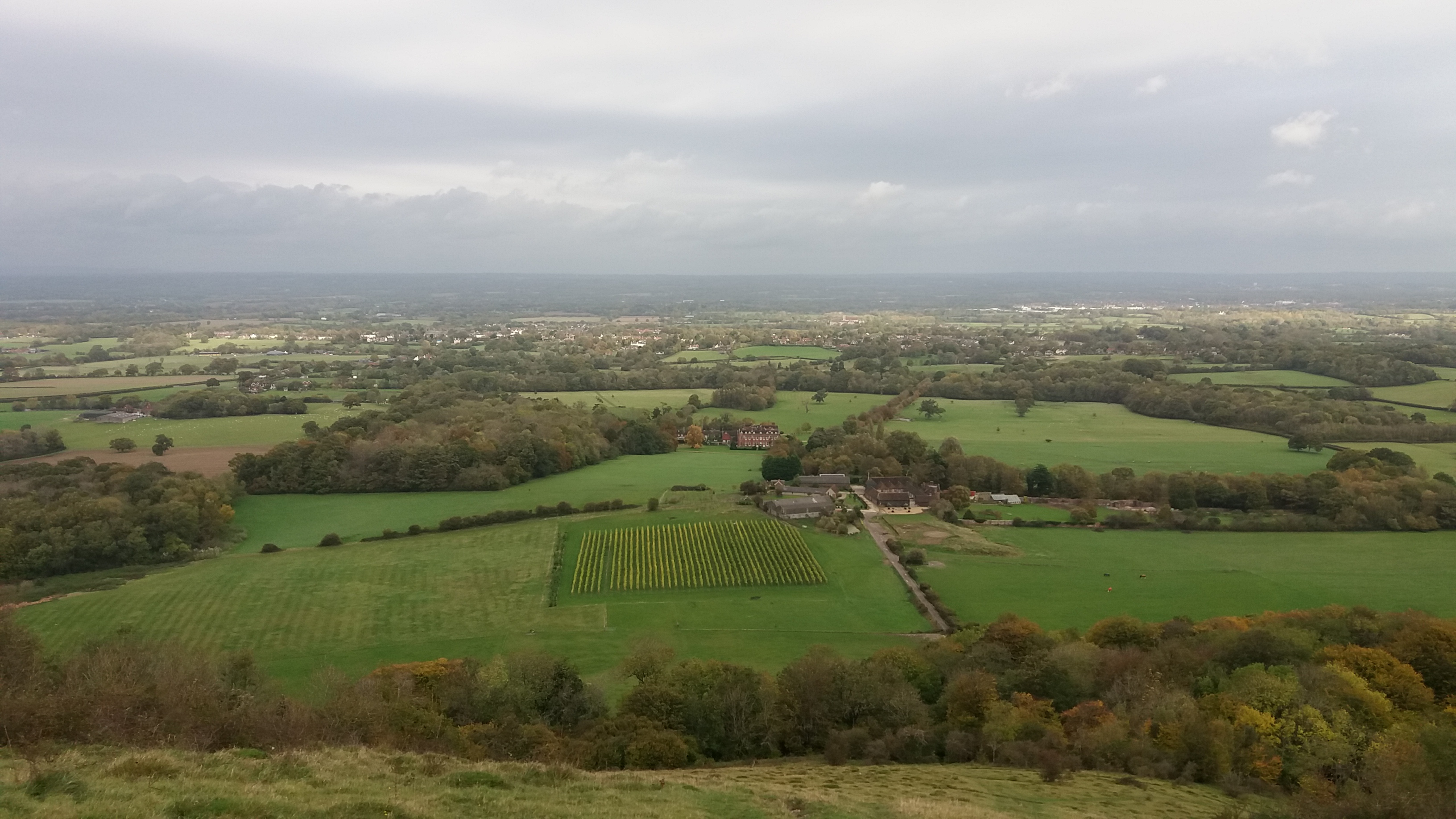
A photo of the area near the ceremonial staff resting place.
Reclaim the Sacred 2019

Monday 4th November, and it was raining in Brighton. Some of the train lines were flooded but I set out anyway, heading to London Bridge and the 4th annual ‘Reclaim the Sacred’ event.

The meeting point was the dragon on the South-East corner of London Bridge. This creature sat on top of a pillar which proclaimed the border of the City of London. This area is not a London borough, but is actually a distinct county, the smallest in the UK.

The plan for the day was to walk through the city of London, performing a series of small rituals. I’d read about the 2018 event in CJ Stone’s blog but still wasn’t entirely sure what to expect.

Reclaim the Sacred began as “a series of public rituals in order to assert our right to spiritual expression in sacred space”, and there had been incidents in previous years of private security guards trying to stop proceedings for fear that privately-owned public rights-of-way were being used for unsanctioned commercial activity. We had no such interruptions this year, however.

The day began with a short introduction from CJ Stone, explaining how the event was originally planned as a one-off, but had somehow ended up occurring annually. We then asked the dragons for permission to enter their domain, making the mark of two crosses on our palm (the City coat of arms) and reciting the motto of the city, Domine dirige nos.

From there we followed a route to Monument for a recital of the Druid’s Vow, then on to the Bank of England. Here, The Money Burner read a section of David Graeber’s book Debt before conducting a small forgiveness ceremony. After that we walked to the Thames, before a final ritual at the London Stone. I’d not seen the London Stone before, although I had read about it in John Higgs’ book Watling Street.

It felt strange to wander through the City of London on a weekday when we were neither tourists or workers. It was as if we were outside the normal life of the city. I was amazed at how few people seemed to notice our group, looking past us. It reminded me of how the strange beings in Neverwhere went unremarked by passers-by.

The walk also brought alive aspects of London I’d read about but never really felt. I’ve read a lot of accounts of London as a palimpsest, but I felt this for the first time as we followed a the route of a lost river, the Walbrook. On a square outside a Starbucks, watched over by Melusine, we listened to a poem. One of the group then explained about how archaeologists had dug below where we stood and found bent stylae, which had been given as offerings.

The final ritual involved placing stones we’d brought with us as offerings to the London Stone. I placed a hagstone that had been sitting on my altar.

I went on the walk as an experiment. I’ve been thinking a lot about ritual in the months since the CERN pilgrimage – how it’s vital to modern life, how it differs from habit. Professionally, there’s also the question of how project management methodologies such as Scrum are overwhelmed by their weekly ceremonies, and the place of the daily stand-up ritual. Participating in public, performative rituals was an interesting starting point for exploring questions like these.

We ended the day in a large pub, and split into small groups to chat. It was fascinating to see how different people had come to be there. Everyone I spoke to was friendly, and I was particularly pleased to discover a fellow celebrant was a clown. It was also great to meet King Arthur Pendragon, who I’d read about in John Higgs’ and CJ Stone’s books.

It was a fascinating start to my last week before the new job, and I’m grateful to everyone involved in putting it on.

Loop: 20 GOTO 10

As part of this year’s digitial festival, Kate Shields presented an installation called Loop. This was a fantastic piece, and received official support via one of the Grassroots Grants. Loop involved feedback produced between two mobile phones filming one another, the result of which was projected (also adding to the inputs to the phones). The images produced were strange, hypnotic and weirdly restful.

The exhibition also included a series of supporting events, such as (B)loop, a musical response from R. Dyer, and some film screenings. There was also my own appearance, a spoken word piece called 20 GOTO 10.

I love doing commissioned work, as it challenges me to be innovative. Despite this being a one-off performance, I tried a number of new things. One of these was making the script into a mobius strip, so that my own reading was in a loop. This meant part of the script would be facing the audience, so I added pictures and large text to it. These may not have been easy to see, but I wanted to give the impression that the script was an aesthetic object in itself.

As any public speaker will tell you, do not write your own slide software – you should use one of the standard tools that are available. But I wanted to incorporate the idea of loops and decay into this aspect of the performance. I knocked together something with processing which displayed video loops, making them darker over time, to be replaced by the next when I used the clicker.
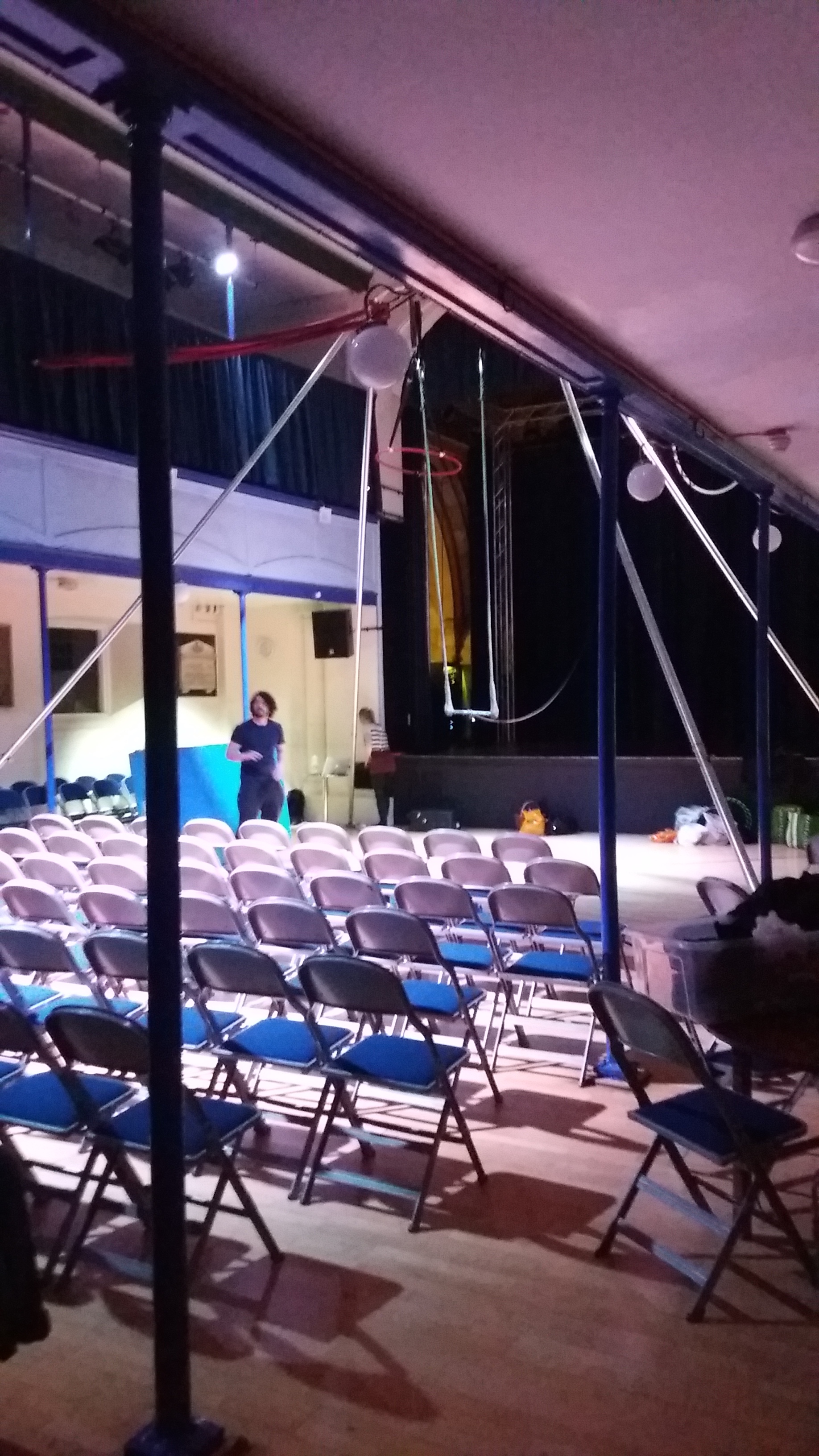
This was a lot of work, but it was taught me a lot. I originally planned the work as a way of preparing some material for Amateur Escapology, the show I’m doing next month. Instead, I ended up talking about a very different theme, that of the importance of ritual, and how ritual works further and backwards in time.
Something I’ve realised recently is that I’ve been more successful with performance than publication. This comes down to the huge anxieties I have about my writing. With a performance, there is a commitment to complete something; whereas submission for publication is something that can be ducked. Which is not to say I haven’t pulled performances, but it’s rarer that I can get away with it.

But it does get easier. When I worked on the first Slash/night many years I became convinced that it would go badly and ruin my enire life. I was more stressed about 20 GOTO 10 than I should have been, but it is getting easier. A day before I looked at it and decided it was horrible. But all the good things I needed were in the script, they just needed to be shuffled. I’m glad I did this.

The Road: A classic hiking novel

There aren’t enough great novels about hiking.

The classic example is, obviously, The Lord of the Rings, where two tourists wander through war zones to reach a scenic mountain. The slog of a long walk also turns up a lot in post apocalyptic sci-fi too. My favourite example is Riddley Walker, with its pilgrimage through a post-nuclear dark-age version of Kent. But the most important post-apocalyptic hiking novel is The Road, a charming story of a father and son hike to see the ocean.

No, actually it’s a grim and depressing novel, with the characters trudging through a ruined world. Images from the film turn up in bleak political memes, with the father explaining/excusing how the world came to be like that. The most common one responds to Trump’s attacks on Hilary Clinton: “But her emails!”.

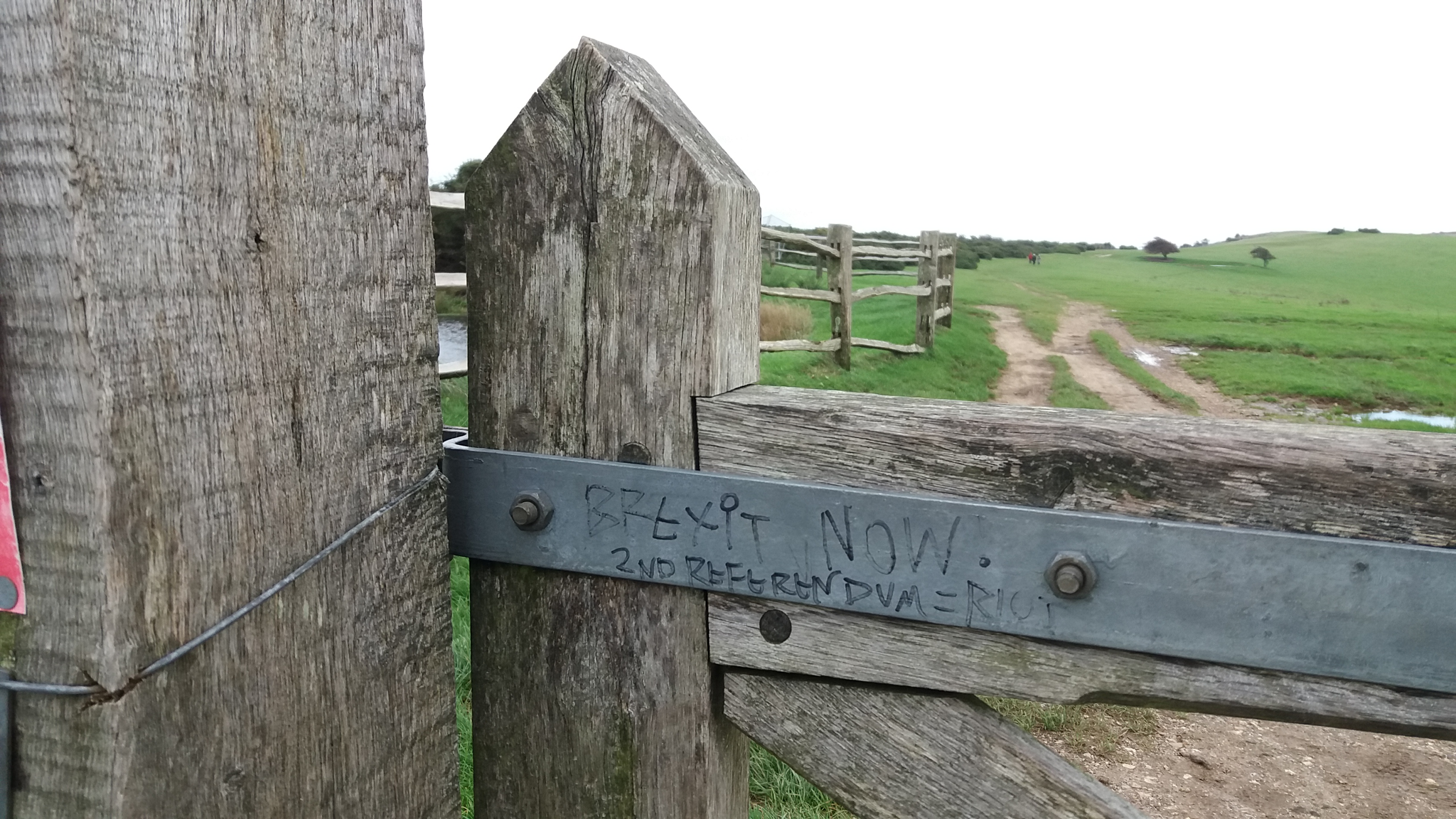
I laughed when I first saw this; but it never seemed a realistic scenario, until ex-“Secretary of State for Exiting the European Union” David Davis promised that Brexit would not mean a “Mad Max style dystopia”. I’d not considered that to be a risk until Davis suggested it. Particularly since Davis was notorious for seeming not to understand how the sequencing for negotiations was supposed to go – a fairly fundamental part of his job. And that same meme of The Road has turned up with the quote changed to be about Brexit.

Given the unbridled incompetence of DexEU, we might not be lucky enough to find ourselves even in a Mad Max-style dystopia.

But there is one hopeful things about The Road. The idea that, when everything else collapses, there is the option to start walking. It’s an idea powerfully portrayed in Raynor Winn’s book the Salt Path. If the worst is happening, keep moving.

On being somewhere other than Varanasi

My favourite city in the world is Varanasi, which lies on the banks of the Ganges, in the Indian state of Uttar Pradesh. Varanasi is so holy that it is a sort of ‘cheat mode’ for the universe. If you die there you never need be reincarnated, but instantly achieve the state of Moksha: dying in Varanasi saves a soul from millennia of different existences. In consequence there are a large number of hospices in the city, where the devout await the end of their lives in this holy place.

If you live in Varanasi then there is obviously a great danger in leaving it, even for a short time. By going outside Varanasi, you gamble with eternity – to have been so close to moksha and then die somewhere else is is ludicrous. Diane Eck writes, in her book Banaras, that everyone in Varanasi has a story of a relative who went to Calcutta and was unlucky enough to die there.

A friend of mine, E., used to live there about 5 years ago. Whenever we talk about Varanasi (also known as Kashi), we joke about a saying I found about the city, I think in Diane Eck’s book:

“having gained this holy ground one should smash one’s feet with a stone to make certain that the priceless treasure of Kāshī is not negligently lost!”

Both E. and I have negligently wandered from from Varanasi. I have a small fantasy that, when I am old, I move out there to die; but in the meantime I continue to risk life outside Kashi’s boundaries.

But there are those who have decided to forsake the power of dying in Varanasi. The poet Kabīr apparently did not believe in pilgrimage, and went to the town of Magahar to die instead, a place said to be so wretched that its Brahmins were reborn as asses. And there was Pandit Mālavīya who, dying, refused to move to the town because he did not want to be liberated from karma because there was too much to be done in his next lifetime in our world.

Kumbh Mela

In 2013, I was travelling from Jhansi to Varanasi. I’d heard the Kumbh Mela was on in Allahabad and I couldn’t pass by without seeing what was forecast to be the largest gathering in human history, 120 million visitors over the month. But I was also scared of what it might be like. Reliable information was hard to find online and the news featured alarming stories of deadly stampedes at the station. I decided to stop in Allahabad during the daytime, taking a few hours to walk to the Tirtha and back.

On the train, a sadhu spoke to me in Hindi. I had no idea what he wanted and nobody around offered to translate. I handed him a banknote and he drew a cracked, dry thumb across my forehead, leaving a mark of ash.

My camera had broken in Orchha, so I had no way of recording the walk to the river. I was swept along with the crowds, all heading the same direction. My rucksack strap snapped as I hitched it on after using a public toilet. I was picked up by a young brahmin, who decided he should guide me. He led me to the shore where he paid someone to place an ornate mark on his forehead. He then poured Ganges water over my head and told me that all my sins in this lifetime had been forgiven. I didn’t dare ask if it included the ones I had yet to commit.

I saw only a fraction of the festival, a small area of the tents. Being a tourist, much of the event was lost on me. I’m not a spiritual person but I know I could be. I returned with the memory of the riverbank near the tirtha, where the Ganges meets both the Yamuna and the mystical Sarasvati river.

Allahabad’s next Kumbh Mela in is in 2025.

Doomsday Clock vs HBO’s Watchmen

Over 30 years, Alan Moore and Dave Gibbon’s Watchmen has been considered one of the great works in comic books. It has achieved huge sales and critical acclaim, and is loved by many readers who ‘don’t read comic books’. This continued success comes despite being disowned by its writer many years ago.

While Watchmen is deeply connected to Alan Moore, the story and characters are owned by DC Comics and, ultimately, the huge Warner Bros corporation. Which means Moore has no control over how it is reused and relicensed.

At present there are two ongoing works produced in response to Watchmen. The first, a comic book called Doomsday Clock, I wrote about here. I think the series is a fiasco, but a critically interesting one. Another recent essay on watchmenwatch.org, McWatchmen: Doomsday Clock took the themes I’d raised much further and is worth a read. It shows how the series aims to resolve editorial issues through story, and includes some harsh digs. As well as considering the issues of “DC editorial politics as a cosmology”, the essay looks specifically at how Doomsday Clock relates to ideas of ownership.

As the jewel in DC’s crown, Watchmen shone too brightly, and its distance from the rest of the company’s intellectual property was an offense. How dare it sit there, untouched for so many years? When all the rest of DC’s IP has been repeatedly dragooned into rebranding efforts, why isn’t Watchmen pulling its weight? If the entire economic base of DC comics weren’t corporate capitalism, I would be tempted to see the assault on Watchmen as a kind of populist levelling

It’s bizarre how many superhero events seem to be about reshuffling corporate properties rather than storytelling. As this essay says, “Rebooting DC becomes part of the DC brand, and the results of the reboot are at least as compelling a source of suspense as simply wondering how the bad guy will be defeated.

In this case, things are far worse, because Moore has such a difficult relationship with DC. After they cheated him out of royalties on Watchmen merchandise, he refused to work for them again. But the small collection of work he had produced for DC has been reused and repurposed over the years, particularly by Doomsday Clock’s writer, Geoff Johns, who has built entire sagas from Moore’s short stories.

DC’s Watchmen Crisis is made even worse by the intervention of Damon Lindenhof’s new TV adaptation of the book, which is currently running. The comic book series is so late that the entire first season of the TV show will be broadcast between the comic’s penultimate and final issues. These delays in the comic book also seem to have caused disruption in other DC series, which were relying on the rewritten continuity that Doomsday Clock provided.

Lindenhof’s work differs from that of Geoff Johns and Zack Snyder (who made the Watchmen movie) in that he attempts to respond to the spirit of Moore’s work more than the text. The first 2 episodes have been bold and incredible. It begins with a reconfiguring of the Superman origin story against the backdrop of the 1921 Tulsa Race Riots, a truly shocking incident where organised racists destroyed a prosperous black community.

The theme of race in America is a powerful one, and Lindenhof is working with incredibly strong material. A show that justifies the themes and content he has used will be truly great. As far as track record goes, Lost is not reassuring. Here, Abrams and Lindenhof produced a show that became increasingly ambitious in scope and technique, only to reveal the lack of a grand design at the end.

Whether or not the show succeeds in its ambition, it’s been good to see a response to Watchmen that has the same level of ambition as the original. The pilot was one of the most exciting openings to a new show I’ve seen. Unlike with Doomsday Clock, I’m watching because I like it so far, not because I’m fascinated by a disaster.