Moments of Time-Travel

Back in 2010, I wrote a blog post, Thinking about Time-Travel, prompted by a question raised on Twitter – ‘What advice would you give to your sixteen year-old Self?’

The advice I wrote then was: “Don’t bother with uni. And take English Lit & History, not Maths and physics for A-Level“. I now see that some even more useful advice would have been to quit boarding school and go to sixth form college. That degenerate and isolated environment was no good for me.

At the end of the post, published when I was thirty-four, I wrote: “Of course, it would be more useful if my fifty year old self could tweet me and give me a heads-up”.

And now I’m fifty years old. The gap between those two times seems both short and long. That’s the nature of time travel.

Thirty-four-year-old me needed a lot of advice. I was unhappy a lot of the time, working a succession of jobs that I hated. I also didn’t appreciate how much fun I was having. But I did the best that I could.

The pandemic changed everything, jolting me out of the ruts I was in. It ended the five-days-a-week office culture, replacing it with something more manageable. There was a block of flats built right outside my window in Brighton, which led me to move somewhere new. Both of these were outside events, but I made good things happen from them.

I left Brighton, moved to a new part of the country, and found a job I love. I still can’t believe I’ve had the same employer for over three years (44 months!). I feel a lot happier living in a small town than I did in the city.

There’s a line in an Arcade Fire song – “If I could have it back, all the time that we wasted, I’d only waste it again”. The last sixteen years had a lot of wasted time, but I’m not convinced things would have worked out so well without it. I’m not the person I wanted to be, but I am a person I’m happy to be. 

In terms of advice – maybe I’d say one important fact to my sometimes-struggling 34-year old self, but otherwise it would mostly be reassurance. You’re feeling OK at 50. You’re healthy. You’ve finally found a job you love. You’re living in a new place.

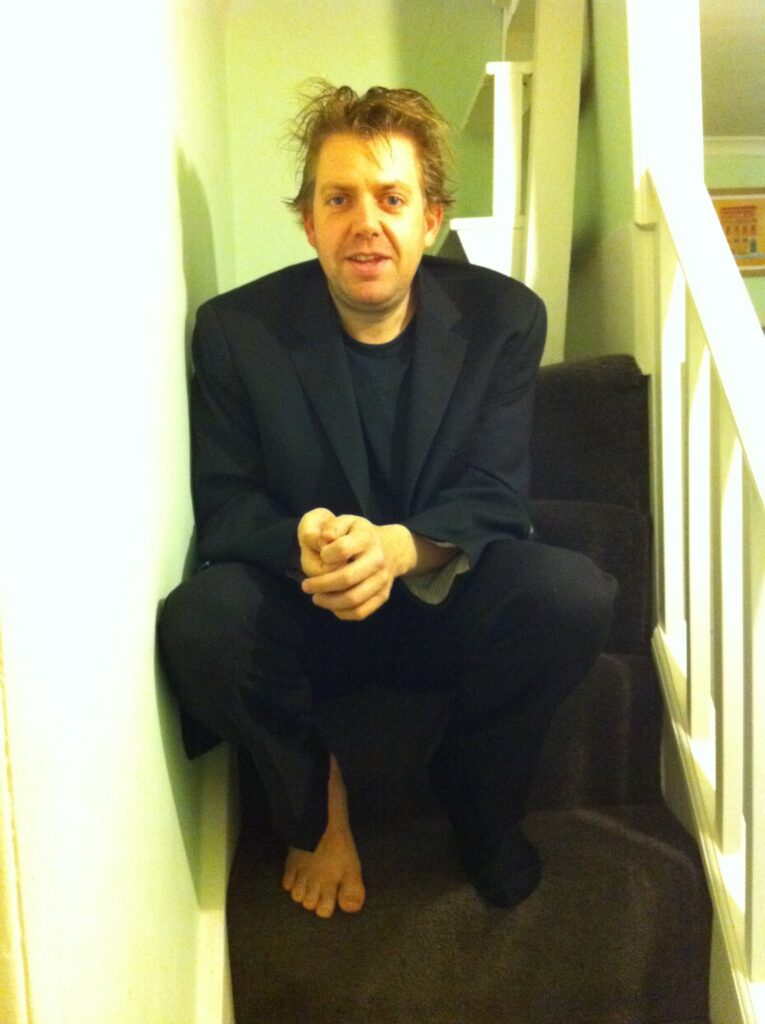
2010

(One of the comments on my previous post asked ‘do you think you’ll be blogging in 20 years time …?’ And I’m only four years from that, so maybe I’ll be posting here again in sixteen years time. If I am still alive then, I will be sixty-six. Still a good age if I’m lucky and I look after myself. There’s a lot of time until sixty-six.)

The South Downs Way: What Next?

Since 2019, I’ve been working on a series of stories set along the South Downs Way. At almost 40,000 words, this is the largest thing I’ve published, and it’s still expanding. The work consists of six print zines and a few dozen stories shared on my mailing list. I’ve now created a website to gather these stories together and help me to trace the work’s structure.

The obvious inspiration for this project is Geoff Ryman’s 253 – but my story is so complicated I’ve got lost in it myself. If I can’t find the paths through, what hope do any readers have? Hopefully, working through the site will help me make this clearer for everyone, including me.

The original plan for The South Downs Way was to do 150 stories, then 200, and it somehow grew to releasing 20 zines throughout the decade, but I’m fine with falling behind on that. I don’t mind if it takes thirty years before this is ‘finished’ (whatever that means).

There are several elements of this book that never happened. I started in 2019, when I expected to be in Brighton for many years, but I left in 2021. If I was still based near the trail then walking/performance would be a larger part of the narrative. It is possible to read the stories as a hike, from west to east, and maybe I’ll do that eventually.

For now, the website provides a simple way to approach this story. Sometimes, my work feels like a lot of different strands that don’t add up to anything. This is true not just of the South Downs Way but everything as a whole – the horror advent calendar, mailing list etc. I want to make my work easier for readers to understand – but more than anything for myself.

Professional Decline

Whole sections of bookstores are dedicated to becoming successful. The shelves are packed with titles like The Science of Getting Rich and The 7 Habits of Highly Effective People. There is no section marked “Managing Your Professional Decline.”

An article I’ve been thinking about a lot is a 2019 piece by Arthur C. Brooks, originally shared by Russell Davies. Your Work Peak is Earlier Than You Think looks at the inevitable, how we decline as we grow older. Up till now, I’ve been able to work with the assumption that I will remain capable at my current pace and workload until the day I retire. Brooks says this is not true:

The data are shockingly clear that for most people, in most fields, decline starts earlier than almost anyone thinks.” Quoting an expert in the field of career trajectories, Brooks has bad news for me: “if you start a career in earnest at 30, expect to do your best work around 50 and go into decline soon after that

Brooks finds an interesting angle for his article – not just looking at how decline happens, but how one can manage this decline happily. The waning of ability can be tough on people.

Brooks writes about Raymond Cattell’s concept of ‘crystallised intelligence’. Fluid intelligence is “the ability to reason, analyze, and solve novel problems”, and this is something that declines, whereas crystallised intelligence is the use of knowledge. Brooks suggests that, as we grow older, we should aim our careers toward “the strengths that persist, or even increase, later in life”.

One example given is that of teaching – “No matter what our profession, as we age we can dedicate ourselves to sharing knowledge in some meaningful way”.

How to make the most of the future?

Mycelium Parish News Update

I’m continuing to send out copies of the Mycelium Parish News, mine and Dan Sumption’s annual catalogue of counter-culture. Thanks to everyone who has supported us and helped to get the word out. We’re slowly working on the 2026 edition, which will be out in January 2027.

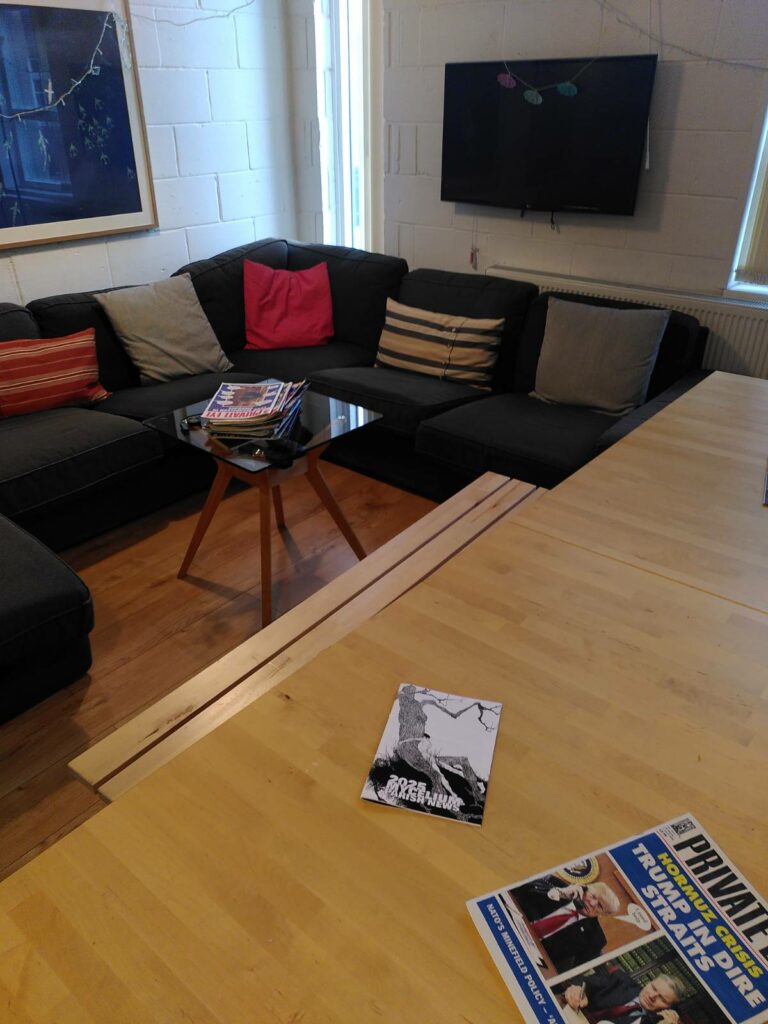
The Mycelium Parish News at the Skiff, my old co-working space

I particularly liked what Kate Shields wrote about the zine in a recent newsletter:

I was excited to receive in the post the latest edition of the Mycelium Parish News: its a great project that features listings of underground, subversive projects by artists, writers, musicians and other weirdos operating in the mycelial counter-culture. You can get a copy through here. The fact that its a physical, self-published magazine sent through the post that only appears once a year makes it a quietly radical project in a world of overwhelm. It is comforting to know there is so much going on than we think, deep in the soil below us.

“A quietly radical project” – I love that description.

Rich Brain

An excellent article by Arnand Giriharasas, Rich Brain, looks at the Epstein files and considers what they tell us about the ultra-rich. His observation is interesting – that being rich basically becomes a life devoted to maintaining that lifestyle – that you end up ensnared in it rather than being freed from the concerns of regular people.

At one point, Giriharasas refers to a New Yorker article about Julian Robertson, worth billions of dollars, who organised his life around avoiding taxation for spending more than 183 nights a year in New York. The tax rate being avoided – on income only – was 3.6%.

Robertson’s driver had to be on alert: as long as they crossed the Queens border en route to Locust Valley by midnight, Robertson didn’t have to “waste” a Saturday as a New York day. Even one minute of a day spent in the city counts as a day of residence.

This sounds like a lot of work to protect a fraction of your fortune. The article also quotes a tweet from NYT editor Michael Roston:

Was it @choire who wrote that while you’re worrying about the future of journalism, the people who control the money are trying to make sure the right car goes to the right house?

We are told that billionaires are wealth-generators whose ideals and innovation help us all to prosper. But, in fact, much of their discussions are about defending and managing their fortunes: “The price of being rich, it sometimes seems from these emails, is that you have to think all day about being and staying rich.” As Giriharadas writes:

We all have a kind of equity stake in what they spend their waking moments thinking about, because, at the margin, you are working longer hours, eating less food, and buying fewer clothes for your kids to spare billionaires from having to pay more in taxes. So — are you getting your money’s worth?

Why I love blogging

I’ve been blogging more recently. This has emerged from re-reading the blog and realising what a powerful record it provides of otherwise-ephemeral moments. It’s also been interesting to pass an export of this to an LLM and ask it to find patterns.

The entries on this blog go back to 2007, but I started blogging back around 20011. The entries and comments have dried up since most people moved onto Twitter and Facebook, but there’s something valuable about writing openly but in a place that’s not promoted, that has only a tiny audience.

While I’ve consistently produced monthnotes since the start of 2020, I wish I had more incidental posts between those times. I’ve been starting to do more of these. To build up a flow of things that have happened. To share more photographs. There’s still value in the monthnotes, but I also want detailed posts about the things I’ve been up to. I want more things to look back on. My own personal blogging revival.

  1. I recently went back and re-read the first few years of my blogs but decided not to import them here. Blogging back then was very different, ↩︎

Appearing on Echologgorhea podcast

I appeared on an episode of the Echologorrhea podcast that was published last week, Thomas Friedman’s 1,000 Hours of Staring, where I talked to Wrev and Saath about one of my favourite works of art.

I love Echologorrhea. The podcast opens with the following announcement: “This podcast is rough around the edges for a simple reason: we are amateurs; we make this in the spirit of samizdat”. Echologorrhea is about sharing excitement, not about joining the podcast industry.

I have several favourite works of art that I love intensely, including The Invisibles, Twin Peaks, and the Tate Modern’s Rothko room. And then there is Thomas Friedman’s 1000 Hours of Staring. I saw Friedman’s ‘sculpture’ back in 2012, at the Hayward’s Invisible exhibition. I wrote a little about the piece and the exhibition at the time: Thousand Hour Stare and The Art of the Unseen. I’ve only seen it that once. While the work is in Moma’s collection, it is not currently on display.

Friedman’s work appeared in a room where all the exhibits were ‘blank’ sheets of paper, which would be identical to a careless glance. Friedman’s particular artwork stood out to me and has haunted me ever since. Hopefully, I successfully communicate this in the episode. We also get into a broader discussion of what we love about art.

2026 – Flow

In previous years, I’ve set resolutions. This year, someone suggested picking a single word – and the word I’ve chosen is ‘flow’. Having a single work makes more sense than a series of goals that inevitably includes ‘start running again’ like every other year.

Flow to me means removing the stagnation in my life. My impressions of 2025 were overwhelm and inertia. I was caught up in several unhelpful, repeating patterns. By increasing flow I can fix a number of issues – lack of exercise, distractions online, dissatisfaction with my writing. I can deal with the clutter in my life – virtual and physical.

I do need to get out of the house more. The pandemic was great for me, in that it removed the need to head to an office five days a week. But I also got out of practise with going out in general (not helped by giving up alcohol a few years back – I feel healthier for stopping, but I miss the energy of drunken nights out). Interestingly, this need to get out more was one of the themes that emerged in a tarot reading that I had a couple of days ago.

2026 is also the year that I turn 50. As a teenager, this seemed impossibly old but now I’m almost there. I think it’s important not to define or limit myself by my age, while making sure to draw the benefits from it. Sometimes, being this old excites me, other times it fills me with dread about all the wasted time in the past.

There are several things I still want to do in my life. I’d better hurry up and get on with them.

My Favourite Books of 2025

Despite everything, I read 78 books in 2025, about 20 more than last year. Not all of these were good – I still struggle with my primary school teaching about how you should always finish a book once you’ve started. Still, there were a lot of great books to choose from for my top ten this year. As usual, these are ordered alphabetically.

Max S Bennett’s A Brief History of Intelligence was a gift and I would not have read it otherwise – I grew bored of pop-science after uni. But this is one of those rare books that changes the way you look at the world forever. Bennett uses the latest neuroscience to show how intelligence has evolved on earth, and how human brains contain the remnants of simpler systems; and, in passing, the reason for dreams and fiction are explained. Great stuff.

We had two books from John Higgs this year. My favourite was Exerminate! Regenerate! (blogged here), which had a little more space for exploring its subject. Writing about Doctor Who risks being fan service, but Higgs explored the nature of storytelling, as well as telling some great anecdotes about the show.

I originally heard about Miranda July’s All Fours via Sara Crowley’s blog. It’s not a perfect novel – too didactic in places, and sometimes blind to the main character’s privilege – but it’s also a book that’s been read by a lot of people I know, something I’ve not encountered in a long while.

Another excellent horror novel was I Want To Go Home But I’m Already There by Róisín Lanigan. I think we expected more haunted houses from the housing crisis, but this does the job perfectly. The iniquities of renting a home are almost more unsettling than the ghosts in this debut novel. I’m hoping Lanigan’s next book is also horror.

There have been a number of good books on folk customs over the year, but Lally MacBeth’s The Lost Folk stood out. MacBeth has a wide definition of folk, including church kneelers and cake-making, and the book ends with a rousing call about the importance of inclusion in folk.

Joseph Matheny is justly famous for Ong’s Hat, but the conspiracy aspects often overwhelm the literary ones. Matheny’s Ong’s Hat Compleat talks about all aspects of the experiment, including the building of an early language model. The form of the book is also experimental, being released as a parallel text and audiobook that explore different parts of the experiment.

Alison Rumfitt’s Brainwyrms is a deeply troubling and problematic book. It’s very much extreme horror and therefore not for everyone. But Rumfitt is an excellent writer, and this is one of the best horror novels I’ve read. Her first novel, Tell Me I’m Worthless would also have been a perfect addition to this list. She is very much on the list of writers I’ll pre-order.

Ultra-Processed People by Chris van Tulleken (blogged here) is a polemic about modern food production and its dangers. van Tulleken’s writing is lurid and comes close to body horror at times.

The White Pube’s Poor Artists was picked up at Todmorden books. It was a well-written, provocative and empathic book about the struggles of artists within today’s society, as well as a polemic in favour of making art.

Careless People is a gossipy book about Sarah Wynn-Williams’ time working at Facebook. It’s also a worrying portrait of the flawed and unpleasant people who have been placed in charge of our world.

My two favourite easters

20 years ago, I was working on the legendary Flirtomatic project with Tom Hume and Devi at Future Platforms. We were fighting against a tight deadline, which left us working on easter Sunday.

Mid-morning, our colleagues Antony and Michael turned up at the office. They said we had to take a break and get coffee. They were quite insistent, so we headed out. And, when we came back, they told us that they’d hidden easter eggs in the office and we had to look for them.

I might have been working, but I think that was my favourite easter.

Another easter memory: Rosy decided to do an easter egg hunt for Olive in St Anne’s Well garden. She hid a few eggs around the trees, which Olive looked for. One of them was found by a squirrel before Olive could get to it. The prize was taken up to a tree branch and unwrapped, little twists of foil falling as Olive held back tears.

Happy easter bank holiday!