The worst Indian meal I ever had

Yesterday I posted about the worst curry I’ve had in the UK, and I mentioned the Mulai Kofta incident. I realised afterwards that I’d not told the story on this blog.

On my first trip to India I travelled to Khajuraho, a few hundred miles from Delhi. The town is famous for its erotic temple carvings, which draw travellers from around the world. Tourist businesses had grown up there but, when I visited, the town was quiet, shops and restaurants almost empty. There were so few visitors that touts would follow for hours, almost one per tourist. The tourists had begun to visit on coach tours, which didn’t stop long. The passengers would eat in resorts outside Khajuarho. It’s a lovely town, but you can do the main attractions in a couple of hours.

On that first, nervous trip to India I tended to follow the Lonely Planet closely and took their recommendation of a place for dinner one evening. “Nothing flash about this place with plastic chairs, but the food’s good – the mulai kofta (mashed potato balls with onion, spices and curry sauce) particularly so”. It sounded perfect. I took a seat on the roof, ordered the mulai kofta, and drank a beer. I was the only person in the restaurant but was prepared to risk it for a good meal.

Kofta is found across the middle east and Asia, and would have come to the Madhya Pradesh district when it was under Mughal rule in the early 16th century. The name of the dish translates literally as cream dumplings. As far as eating Mulai Kofta went, this was the place to do it.

The dish was terrible. The rice was weirdly crunchy, the dumplings bland and unappetising. I think the regular chef was off, and the food was reheated from the day before. As I ate a little of the sauce, I wrote up the day’s adventures in my notebook, and the waiter became convinced I must be working for a guidebook. I’m polite to a fault, and didn’t want to embarrass the man for the disastrous meal, and pretended it was all fine, having assured the man I had no connection to the Lonely Planet or Rough Guide.

Years later, I was hiking in Essex with my friend Katharine and we ate at a Southend restaurant called Papadum. This place also looked a little odd, brightly lit, but the menu was interesting. It didn’t have familiar British curry dishes like chicken tikka masala or vindaloo. When Katharine ordered, she was firmly told that she should not have extra chilli with her butter chicken. I figured I would try the mulai kofta.

And it was perfect. The dumplings were soft and gingery, the sauce spicy and warm. We chatted with the owner afterwards, and he told us about his enthusiasm for proper Indian dishes, how he wanted to educate his customers away from Anglo-Indian curries. They were doing a great job, and the Essex mulai Kofta easily beat the one from India.

There’s a real irony there. The Khajuraho version of the dish should have been authentic, but the Essex version was much better. I’m all for authenticity in food, but edibility is the most important thing.
Slices of Balti

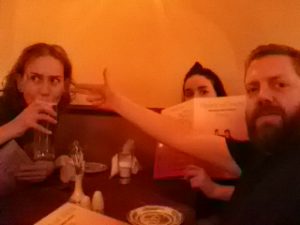
One of my favourite things about visiting a new place is trying their local curry house. Part of the fun is that it’s a gamble. The photo below was taken on a recent curry expedition with Rosy Carrick. It isn’t great quality, but it’s better than the food was.

Me, Rosy and her daughter were visiting a tiny English town. The place had two respected Thai restaurants and one of the best pizza restaurants in the country – but I insisted that we check out the local curry house. I’m going to call it Slices of Balti, which is not its real name but is almost its real name (*).

The restaurant was pretty much empty, but that means nothing. I’ve been to empty restaurants that were great. With my parents one night, I was turned away from Brighton’s Chilli Pickle when it was empty, and I hear the food there is pretty good. So, faced by an empty small-town curry house, I insisted we go in. I mean, Balti is one of Britain’s national dishes. I was even going to forgo my usual vindaloo to try the dish boasted about in the restaurant’s name.

We gave our orders to the waiter, who spent most of the meal hiding in the back of the restaurant, playing with his phone. I like to think he was searching for jobs in better restaurants. Two sad flies dragged themselves through our table’s airspace.

When the pappadums arrived, Rosy complained to use that they tasted of burnt oil. I didn’t think they tasted that bad, but Rosy’s daughter did. She didn’t say anything though, focusing instead on stopping her mum’s commentary being overheard by the waiter.

Soon, the main course arrived. It was one of the most disappointing dishes I’ve ever eaten. Almost worse than the Malai Kofta I had in Khajuraho. It didn’t taste much of curry, being more of an English vegetable stew with a little curry powder. Sad potatoes, cauliflower and carrot floated in an anaemic sauce.

Thing is, every restaurant can have its bad days. I’ve had very good curry houses serve meat in my vegetarian dishes – hundreds of other people have had amazing experiences there, including me. Maybe this place was usually much better. But there was a flop-sweat feeling to this place, that melancholy of failing restaurants.

As we left the restaurant, a couple of other people came in. I wondered if we should warn them to save themselves, to turn around and head for one of the Thai places. But then, if I was going to save anyone, it should be the waiters, who’d be trapped there all night. We should clear the kitchen, take everyone to the pub, and get so drunk we ended the night singing.

We left quietly and disappeared into the night. But I wonder if I should reach out, make a call and ask Slices of Balti if everything is OK?

(*) That is totally not my joke, but was stolen from Shit Theatre. Sorry.

Horror and Harlow

I spent several years living in Harlow. It’s a place I loathe. I would gladly see it evacuated and used for military target practise. Or just left empty to collapse as a warning to future generations.

I can only think of two good things about Harlow. One was the Parndon Woods, which were large enough to that I could pretend that the town was far away. The other was the library. As a teenager, with little money and lots of curiosity, the library was vital to me. Nowadays, the Internet would do the same job and do it better but, back then, the library was the only access I had to interesting culture.

I could borrow tapes and listen to indie bands I’d read about but nobody at school was listening to. I borrowed the first Manics album and Dinosaur Jr’s Where You Been from there. I had to order Naked Lunch in from another library. I’m not sure I understood it then (I’m not sure I get it now) but I had a chance to grapple with it. But my favourite thing was the shelf of horror fiction. A run of anthologies, such as the Splatterpunks collection, and various Best New Horror anthologies.

When I was a child, I thought that the reason horror films were 18-rated was that they would send a young mind mad. This was an easy impression to get from the video nasty panic that ran throughout my childhood. Horror seemed dangerous and forbidden. I read the back-cover blurb of books in WHSmith with dread.

The first horror story I read was Ray Bradbury’s The Small Assassin at 11 or 12. I found it incredibly disturbing but, at the same time, I was amazed by the profound effect it had. All the best horror stories have that physical thrill of sensation. Clive Barker’s In the Hills, In the Cities is one of the great short stories, and gains power from the grim imagery.

The Best New Horror series introduced me to some great writing. In writing horror, many of the authors pushed the boundaries of language and imagery.  Secretly, of all my literary ambitions, the strongest is to become a horror writer. I loved those stories, some of them so very well crafted.

I’ve no love for Harlow. If someone told me they were going to use it for nuclear testing, I’d celebrate that. I can afford to buy my own paperbacks now – I just don’t have as much time to read. Those few shelves in the library weren’t part of the new town plan, but they are the only bit I thought worthwhile.

Bob Lives!

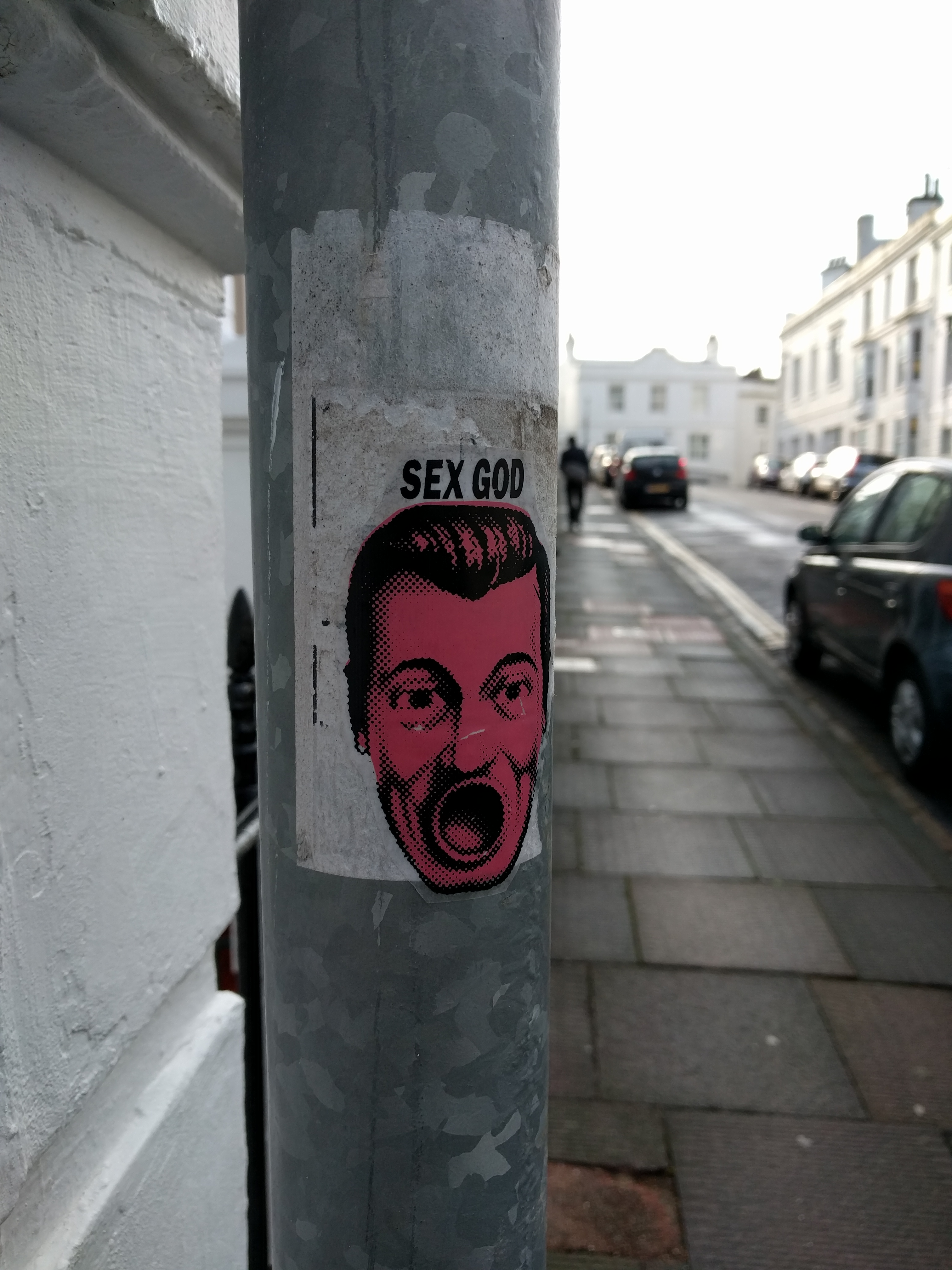
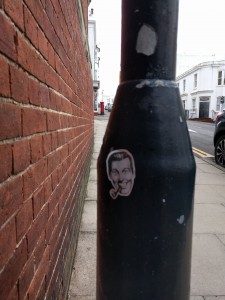
I was really happy to see this sticker a while back:

IMG_20160405_081718

Long ago, around the turn of the century, the Bob Dobbs symbol was everywhere in Brighton. Inspired by the American Church of the Subgenius, Jim Bob began to use the Dobbs head as a symbol for parties and general mayhem. He gave an excellent talk on this at the Wellebourne Society a few years back.

As with most interesting things going on in Brighton around then, I knew it was happening and never did much about it – although I did enjoy one of their pre-election fundraisers at the Concorde 2.

The story of the Brighton subgeniuses is a fun one, with an entire movement accidentally being created. My favourite part of the story was the visit by the Church of the Subgenius’s American founders to see what was going on (and to ask about the cut of the merchandising they were supposed to get).

At one point, in the ’90s, the Brighton [group] had a whole “Bob” storefront… they almost won a local election with “Bob” – Rev. Jim in a Giant-Dobbshead mask — running under the Dobbs Free Party banner; PISS, an air guitar band with Kiss-style Dobbsheaded members, had an actual recording contract… To many [Brighton people], the Dobbshead had always signified only a great party at Jim’s. They’d no idea that there were also dozens of books, CDs and films, assembled by hundreds of Subgenii from every other place in the world BESIDES Brighton. It was an almost Galapagos-like evolutionary situation, whereby a whole species had been cut off from its fellows and had advanced along completely different evolutionary lines.

It’s good to see the Dobbshead turn up about the place again. I may not have been anywhere near this when it happened at the time, but it’s still a sign of the Brighton I love, a place of odd stories and strange societies.

IMG_20160411_082149

David Cameron’s Curry Curse

www.shaanrestaurant.co.uk

It turns out that Teresa May is not the only Conservative leader to have jinxed a curry house. While researching the ongoing problems between British curry restauranteurs and the leave campaign, I learned that David Cameron has also brought bad luck.

There are strong links between the British Curry industry and politicians. This has a formal committee in theBritish Curry Catering Industry All-Party Parliamentary Group. The industry has strong lobbying groups, and politicians are eager to woo them – as you’d expect for an industry worth about £4½ billion). And, back in 2006, as leader of the opposition, Cameron used curry as part of his “unprecedented bid to woo the ethnic vote“.

When asked his favourite restaurant, Cameron said “You cannot beat a curry at The Khas Tandoori in Chamberlayne Road, Kensal Green, or curried goat from one of the street vendors during the Notting Hill Carnival.”

Back in the day. Gordon Brown professed a love of pop band the Arctic Monkeys, but was unable to give the name of any of their songs. An Evening Standard investigation of Cameron’s favourite curry house found a similar deception:

David Cameron may name The Khas Tandoori Restaurant as his favourite ethnic eaterie — but the owners seemed a little bemused. When manager Jomshed Miah was asked if he knows who David Cameron is he replied ‘Yes, of course’. But when asked whether Mr Cameron has ever dined in his restaurant, Mr Miah paused before replying: ‘I don’t think so. I have not seen him in here — maybe he orders take-aways.’

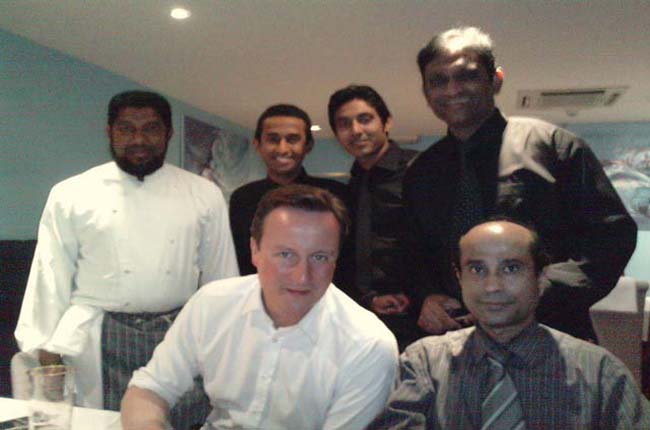
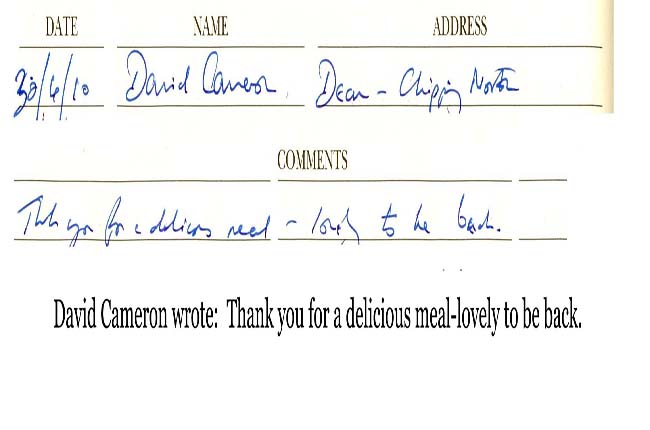
A big fan of Indian food, David Cameron has stated “I like a pretty hot curry.” The night of the 2010 election, which saw him elected Prime Minister, Cameron was eating in the Shaan Restaurant in Witney, Oxfordshire. In October 2013,the Shaan was raided and three men arrested for working illegally.

This is similar to what happened to the Innovation restaurant in Maidenhead, which was opened by Theresa May. If I was running an Indian restaurant, I’d be nervous about any endorsement by a Conservative Leader.

Brexit Curry

An article on the BBC website today, Cars, curry and tortillas’ role in Brexit charm offensive, discusses the diplomacy underway between Britain and the EU:

Food has also been used by Conservative members of the European Parliament to woo their continental colleagues in Brussels, according to the Telegraph. The newspaper reported that they have hosted dinners at the city’s best curry house.

This is particularly appropriate because curry was David Cameron’s last supper, the night before he quit Number 10 Downing Street. The Guardian reported that the order “contained delights such as samosas, Kashmiri rogan josh, a mixed grill and saag aloo (spinach and potato)“. The restaurant that provided the meal, the Kennington Tandoori, is thought to be the first curry house mentioned by name in Parliament.

Curry was one of the battlegrounds in last year’s Brexit campaign. Restaurant owners could be found arguing on both sides. The Bangladesh Caterers Association was in favour of Brexit, whereas the Asian Catering Federation was in favour of remain. Both sides saw immigration rules as the cause of a shortage of curry chefs, but disagreed over whether the issue was the EU. Priti Patel, Employment Minister and leave campaigner, claimed that the EU was a barrier for trade between India and the UK, pointing to a recent ban on Indian mangoes.

In an article in the Evening Standard, published in May 2016, Patel explained how Brexit would save British curry houses:

Uncontrolled immigration from the EU has led to tougher controls on migrants from the rest of the world. This means that we cannot bring in the talents and the skills we need to support our economy. By voting to leave we can take back control of our immigration policies, save our curry houses and join the rest of the world.

She also gave a speech where she said:

It is manifestly unfair and unjust that curry houses and members of our diaspora communities face having to deal with a second-class immigration system while chefs from the EU can waltz into this country and straight into employment.

Patel was not the only politician to make grand promises. In 2016, Brexit minister David Davies hosted theBangladesh Caterers Association’s huge annual dinner, and he promised benefits for every community and that “there will be something for BCA.”

Post-Brexit, things don’t seem to be working out as promised. By January this year, May had refused to increase immigration to support Britain’s curry industry. Curry restaurants continue to close, squeezed by rising costs and staffing issues. In fact, it might have made things worse, with no change to non-EU visas while reducing the number of Eastern European staff, who were covering some of the shortfall (it is estimated 5-6,000 of 150,000 curry workers are Eastern European, and maybe as many as 10,000). The falling pound has also meant higher costs to import ingredients.

In contrast to Patel’s offers, this year’s General Election brought further promises from the Conservatives to reduce immigration, along with a levy of £2000 for every business employing foreign workers.

Restaurant owner Oli Khan felt ‘betrayed’: “It is very disappointing that Brexit campaigners such as Priti Patel and Boris Johnson, who said the curry industry would be better off the EU, have not kept their promises.” Pasha Khandaker, president of the Bangladesh Caterers Association said that, “My organisation supported Brexit for several reasons but the main reason was to bring people from abroad to help our industry to survive.”

It remains to be seen what the effects of this ‘betrayal’ is, but with the referendum won, there is less attempt to communicate with the curry-houses. According to Oli Khan ““We are angry as the Brexit ministers are not responding to our calls, they are not responding to our mails.””

Manhole

manhole

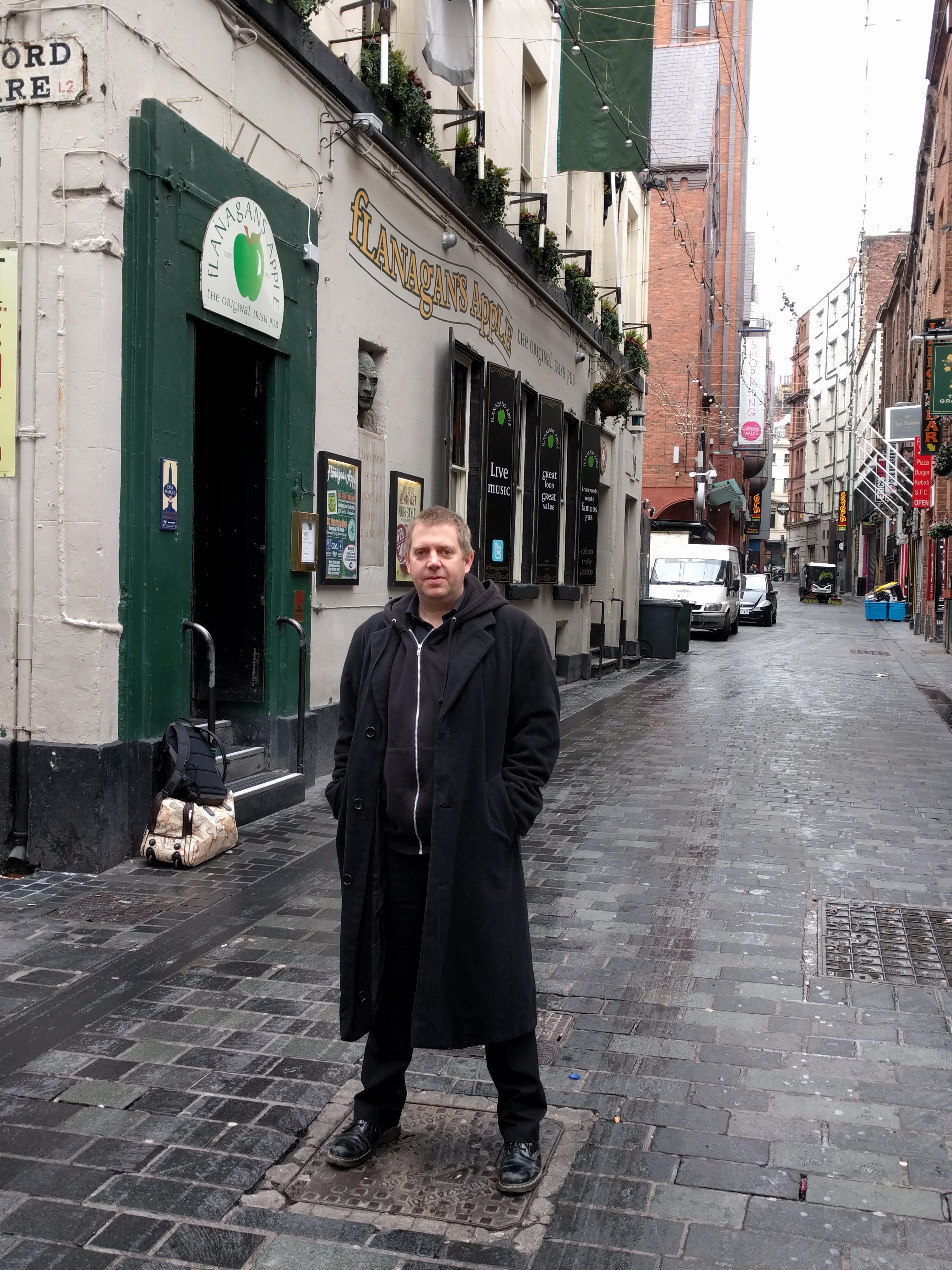
The last time I went to Liverpool was in the 90s, with my Dad and sister. I’d just discovered the Beatles and wanted to visit the city they came from. We found very little trace of the band, other than a few small memorials.

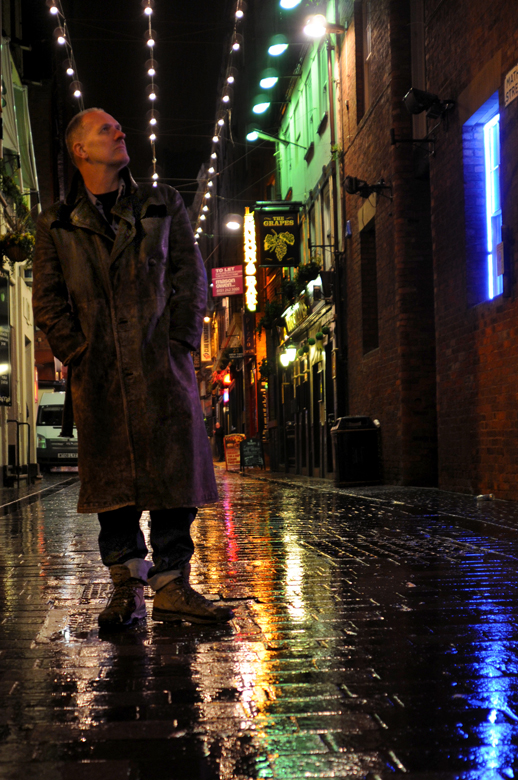
On my most recent visit to Liverpool, last year, the Beatles’ heritage was being properly exploited. On Mathew Street there were three Cavern Clubs and a statue of John Lennon. I walked past all of these because, on this trip to Liverpool, I was looking for the manhole outside what the old ‘Liverpool School of Language, Music, Dream and Pun’. This is said to be a very special manhole. To quote Bill Drummond:

[The interstellar ley line] comes careering in from outer space, hits the world in Iceland, bounces back up, writhing about like a conger eel, then down Mathew Street in Liverpool where the Cavern Club – and latterly Eric’s – is. Back up, twisting, turning, wriggling across the face of the earth until it reaches the uncharted mountains of New Guinea, where it shoots back into space… this interstellar ley line is a mega-powered one. Too much power coming down it for it not to writhe about. The only three fixed points on earth it travels through are Iceland, Mathew Street in Liverpool and New Guinea. Wherever something creatively or spiritually mega happens anywhere else on earth, it is because this interstellar ley line is momentarily powering through the territory.

This manhole is holy ground, of a sort. It is the location that appeared in a dream of Carl Jung (who never actually visited Liverpool). Bill Drummond stood for 17 hours on that manhole cover the day before his 60th birthday. In 2008, Julian Cope busked on this spot for a day. As Cat Vincent writes, the manhole had become “a site for connecting to the watery powers of the Pool of Life”.

It was good to stand there for a minute.

Bill Drummond by Tracy Moberly

Passionate Machine!

Given that this is my response to a show about time-travel, it’s ironic that it’s as late as it is. I also have a weird feeling, as if it might not be the only time that I’ve written this. There could be other timelines where I’m also writing descriptions of the events – or where I managed to post them sooner.

So, obviously Rosy Carrick’s show Passionate Machine, was amazing. I mean, I’d say that even if it wasn’t (if you want a more objective review, check out the one from the Brighton Argus). Hopefully, I can persuade you there were many other things that made it great, not just that I want to stay friends with her. The show describes a strange period in Rosy’s life where she received messages that could only come from the future, sent by a mysterious figure. These messages related to Rosy’s PhD research into the great Russian poet Vladimir Mayakovsky.

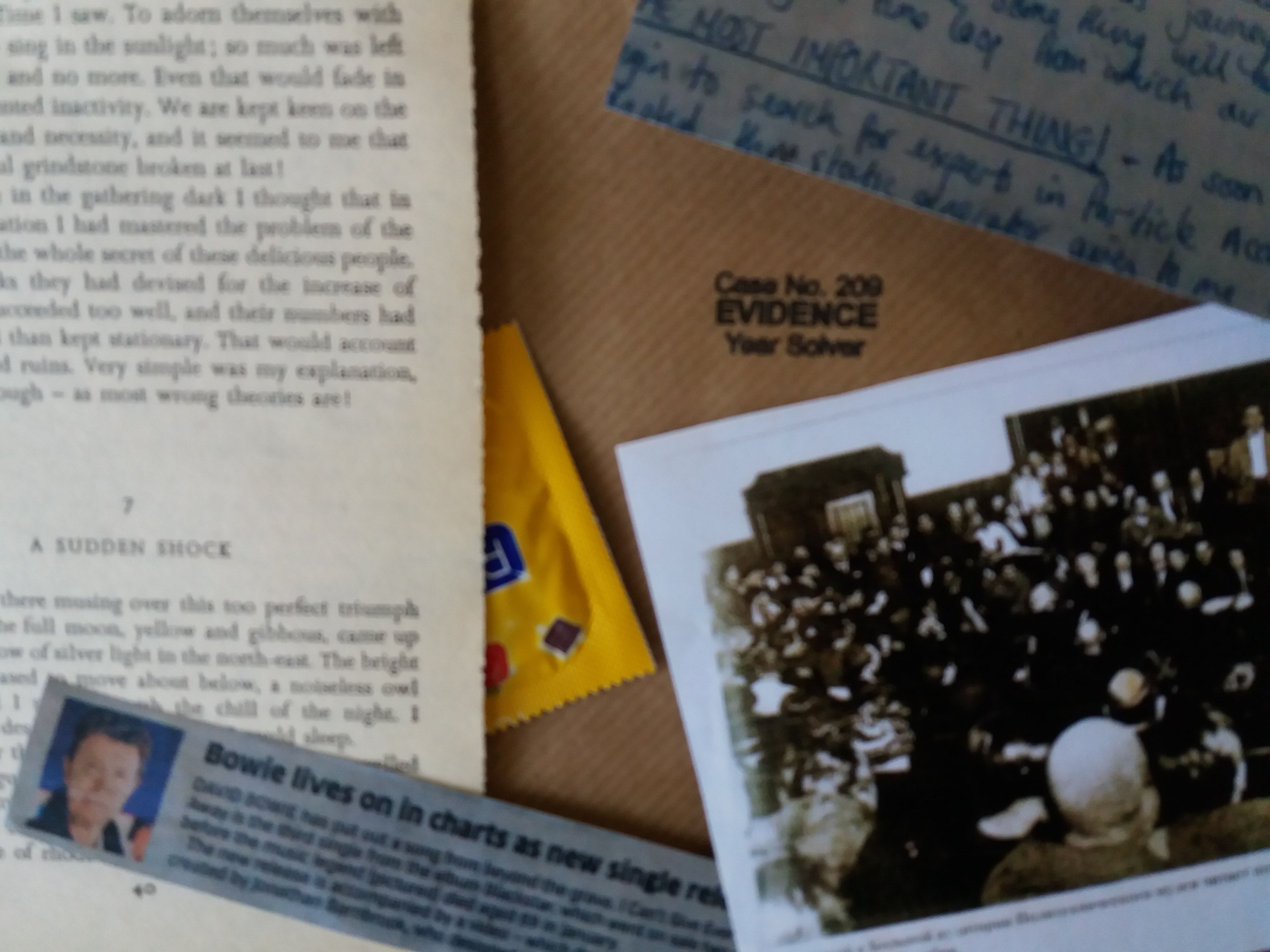
Rosy’s show was spoken word rather than poetry, and incorporated video footage and images (as well as an audio recording of me). Watching it I was impressed at what Rosy had done with the one-man-show. It’s a lot more interesting than someone simply standing up and reciting things. She’d used the format to its limit, for example handing envelopes of evidence to the audience as they arrived. There are also some moving moments showing how  people had responded to the story online.

The performance we saw was a work-in-progress, but it was pretty much complete and incredibly moving. I liked that the show did not get bogged down in the mechanics of time travel, taking it for granted and working with that. The resulting story is more personal and emotional than a lot of similar portrayals. As the show explains, we are all time-travellers in a sense, relentlessly pushed forward, able only to send messages forwards. Rosy has had a very different experience.

For me it’s a very different show than for most of the audience, as I was around for a lot of it. Rosy talks about the university course where she first discovered Vladimir Mayakovsky. Rosy was, apparently exasperated by my foolish questions in that class, but warmed to me when we chatted. I ended up looking after her pet cat Squeaky one Easter while I wrote an term paper on Wuthering Heights and, later, a chunk of my dissertation. We’ve been friends since then, through all sorts of adventures. And a lot of Rocky films.


My chilli plant is a dick

Right now, I’m not entirely sure where my chilli plant is. I’m not sure this is a bad thing.

Back in March, I planted about 20 chilli seeds from a batch that my friend Rosanna gave me. Only one of these sprouted. But it grew into a massive plant and, for a time, I felt smug at my skill.

Growing plants was a big deal for me. People sometimes told me a few green things would make my house seem warmer and more welcoming, but I didn’t want the responsibility of plants. The one time I was given one, by my friend Teresa, I had the sad duty of watching it die and wither, despite my efforts.

I almost killed this plant a couple of times. While I was away for 5 nights on the Pennine way, my house sitter cancelled. I arrived home just in time to find the plant almost dead. Looking after another living thing makes you aware of the true fragility of life.

IMG_20170517_101854

I almost killed the plant on one of the hottest days of the year, when it was between the window and the curtain, roasting in the trapped heat. In a few hours it had dried out precariously. But it survived and even flowered. Then the the flowers kept dropping off, littering the shelf around. But there was no sign of fruit.

I checked back on Rosanna’s instructions: Put it in a 9″ pot, if you haven’t done already, and keep it wet. If it’s dropping flowers (without leaving little chilli-nubs behind) then it’s unhappy. Either the pot is too small, or it’s too dry, underfed, or too wet (the latter is unlikely).

One problem was that I’d somehow bought a 7 inch plant-pot, not a nine inch one, so that was quickly fixed, but it didn’t help. Chillis are considered to be one of the easier things to grow. Growing what is, essentially, a garnish, is proving so tough that it amazes me that someone, somewhere is growing enough plants to keep me alive.

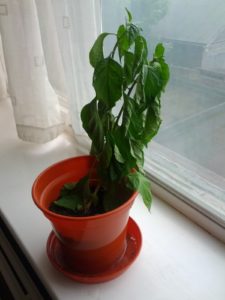
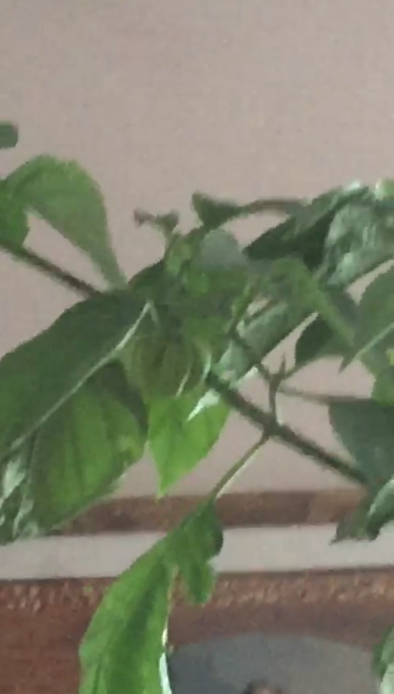
With all the travel I’ve been doing lately, I had to find someone else to look after the plant. The photo at the top of the page shows me carrying the plant across Hove. And, a few days after the plant left my house, I received a video from the friend looking after it. The blurry short piece of footage reveals something unexpected. Look close at the centre of the picture and you can just about make it out.

Among the leaves is a tiny green Scotch bonnet pepper. The minute my back is turned, a fruit appears. All this grief for a single pepper, when I could buy a fresh one for pennies. A whole pound would buy me a bottle of Encona. It seems a lot of work for little payback.

The friend who was caring for the plant is away for a few weeks, and I’m not sure if they’ve made arrangements. Maybe they’ve given the plant to someone else to look after.

My lounge does feel emptier without her though, and it would be easy to be reunited. I really should find out where my chilli plant has got to.

In the early days of the curry house

Around the time that the Guardian published Bee Wilson’s article Who Killed the Curry House, it also republished an article from 1957, Rising popularity of Indian restaurants in Britain. At that time, Indian food was still a novelty in the UK. The article is an interesting read, positioning curry as a new thing to the British while noting a very well-informed audience for the cuisine.

When you have missed the homeward bus… a Northern city can be an inhospitable place. Once there was nothing to do and nowhere to go: now there are Indian restaurants. In the middle of every night, Sunday or weekday, when the cafes and steak houses are shut and their waiters asleep, egg pilao and Madras chicken curry, Bhuna Gosht, Kofta, Jelabi, and Poppadum are coming to birth, filling and astonishing the mouths of those who always miss buses, all over Britain.

There were estimated to be a hundred Indian restaurants in London at that time, a dozen in Manchester, with more spreading over the country, including “towns as unlikely as Northampton“. A brief history is given, with Veeraswamy mentioned, as well as the Koh-i-noor, which opened in 1929. Indian restaurants from that period sound like strange places:

In those days the clientele was limited mostly to the homesick prince, or the lover of the exotic: at one time or another most of the Indian rulers called and fed, with their retinues. Running up accounts with these private armies of secretaries and musicians and doctors was a nervous business, for occasions arose when master and retinue would refuse to pay, both arguing that it was the other’s responsibility. At such moments the proprietor of the Koh-i-Noor would call upon the services of a solicitor in full morning dress, with silk hat.

Many of the 1957 customers were discerning: “The proprietors are at once troubled and delighted by a class of gourmets who raise an instant fuss if they are given Italian rice instead of Siamese first quality, who know and are angry if the spices have been added a minute too late in the frying stage.” It seems that many people had developed a taste for Indian food during the war.

The first person to open an Indian restaurant, Sake Dean Mahomed, is buried in Brighton. However, he had given up on catering before he moved down here, making his fortune by running a bathhouse. However, curry in Brighton was well established by the time the article above was written. According to Rose Collis’s New Encyclopedia of Brighton, the first Indian restaurant to open here was the Taj Mahal in 1948 in Ship Street. (She also notes the Agra Balti House, the ‘first authentic Balti house in Sussex’, opening in 1993).